October 15, 2026
Bonus Content: Transsion’s Hong Kong Price Looks Cheap. Memory Chips Say Otherwise.
Dear Reader,
While pundits on CNBC and Fox Business argued about the “AI bubble” for most of the year…
Nvidia invested more than $7 billion into a radical “light-speed” device…
That’s about to shatter the limitations of AI as we know it…
And unlock the next wave of AI growth.
Bill Gates put more than $200 million of his own money into it…
And BlackRock, Vanguard, Morgan Stanley, even Norway’s trillion-dollar sovereign wealth fund, are all moving money to prepare for what’s coming.
Already, stocks involved with this “light-speed” device are breaking out 133%, 217%, even 320%…
But it’s just getting started.
In fact, Wall Street insider Jason Bodner – the same man who called Nvidia at $4.50 – says this radical device is about to launch a whole new wave of AI winners…
And to prove it, he’s giving away his #1 stock involved with it – for free.
Click here to learn more. (No purchase necessary.)
Regards,
Lindsey Hough
Managing Director, Brownstone Research
P.S. Jason also flagged 10 popular AI stocks he believes will get crushed once this radical device goes mainstream. Click here to get the full list before it’s too late..
Transsion’s Hong Kong Price Looks Cheap. Memory Chips Say Otherwise.
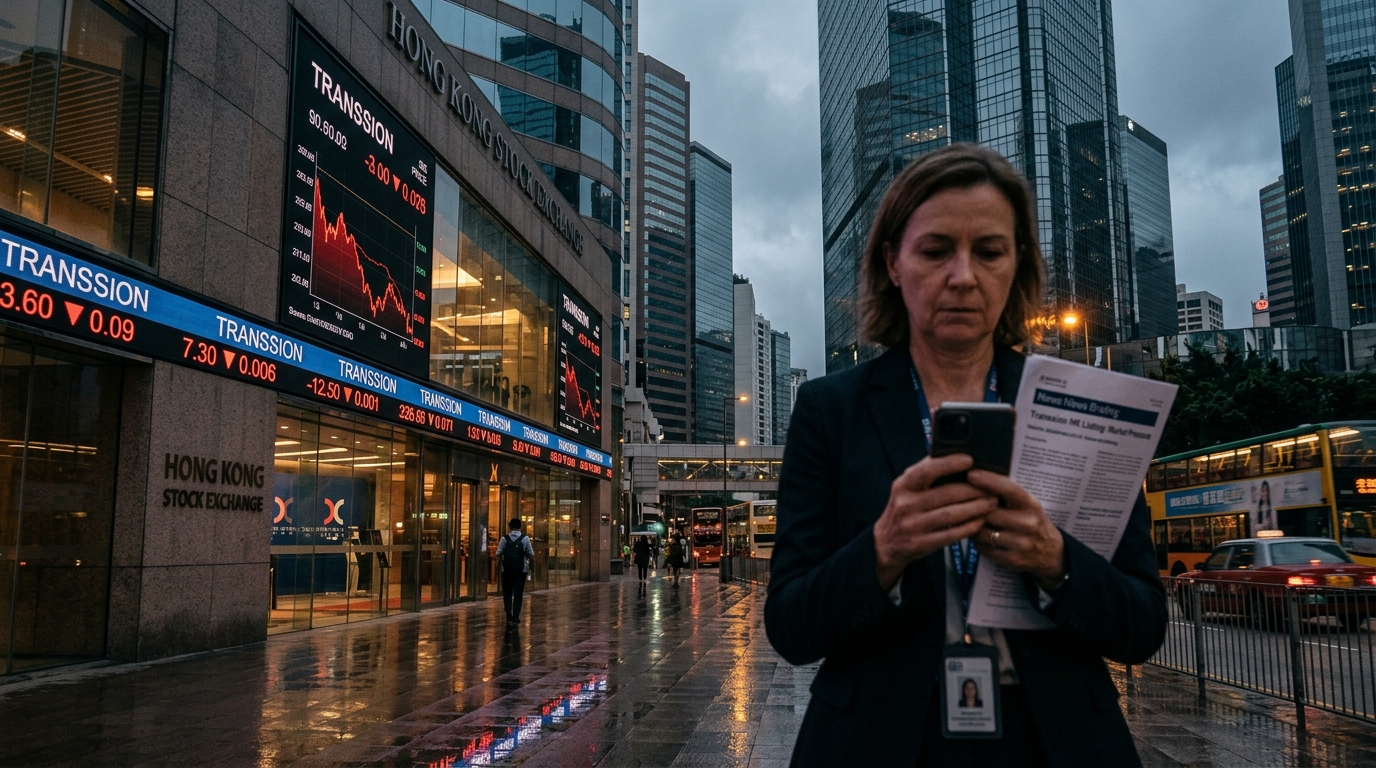
Hey there, bargain hunter. Africa’s biggest smartphone seller just landed on the Hong Kong Stock Exchange this morning, and the headline number is tempting: HK$35.30 per share, the bottom of the marketed range, after the Shanghai-listed parent has lost a big chunk of its value in the past year. Cheap entry or falling knife? Let’s sort it out.
Scoreboard
Transsion sold 86.6 million shares at HK$35.30 each, compared with the maximum of HK$38.80 they were marketed for. The company raised about HK$3.06 billion, roughly $390 million, from the sale. The Hong Kong public offering was oversubscribed 4.46 times. The Shanghai-listed A-shares (688036.SH) are down roughly 43% over the past twelve months.
What Actually Happened
The selloff is not a mystery. Net profit for 2025 came in around CNY 2.55 billion, a 54% drop from 2024, while core net profit excluding non-recurring items fell 58% year-on-year, as rising memory and storage costs squeezed margins. Gross margins declined for three consecutive years, reaching 18.7% in 2025.
Rising memory costs hit low- and mid-range products hardest. With limited pricing power and thin profit buffers, a higher share of core component costs quickly eats into manufacturers’ profitability. Transsion’s phones average around $80 per unit. There is not much cushion.
The Business, Briefly
Transsion commands a 47% share of Africa’s smartphone market and ranks first in multiple Middle East and South Asian countries. Its three brands, Tecno, Infinix, and itel, each target a different price tier across emerging markets where consumers are price-sensitive and first-time smartphone buyers still outnumber upgrades. For full-year 2025, Transsion shipped approximately 169 million mobile phones.
The Numbers That Matter
- Revenue (2025): CNY 65.6 billion, down 4.6% year-on-year
- Net profit (2025): CNY 2.55 billion, down 54%
- Gross margin (2025): 18.7%, down from about 23.2% in 2023
- H1 2026 revenue: CNY 35.4 billion, up 21.85% year-on-year; net profit rose 46.22%, driven by product price increases and low-cost legacy inventory, though operating costs climbed 17.98%.
- Cash: CNY 16.7 billion on hand, total debt CNY 4.1 billion, net cash CNY 12.6 billion.
- Proceeds use: Roughly 40% earmarked for AI technology R&D, 30% for marketing and brand building.
Is It Cheap?
The Shanghai shares trade at a trailing P/E in the high teens to around 20 times, depending on the quote source and timing, and a price-to-sales ratio that screens under 1. That looks undemanding until you clock the catch: as inventory advantages fade and memory chip prices keep climbing, the sustainability of the profit recovery faces scrutiny.
Memory pricing does not move in isolation. The broader semiconductor sector’s bear-market drawdown shows how quickly component cost cycles can reprice an entire supply chain.
UBS estimated that memory cost per smartphone could rise 37% in Q4 2026 from a year earlier, equal to roughly $16 per device, amounting to about 6% of the average selling price for low- to mid-end phones. For a company averaging $80 per handset, that is not a rounding error.
The other side of that cost pressure is worth understanding. NAND suppliers are running record margins precisely because the shortage hitting low-end handset makers shows no sign of easing before late 2027.
Bull / Base / Bear
Bull: The IPO is priced for upside versus peers, and analysts project rapid EPS growth if the H1 2026 earnings rebound proves durable. Africa’s smartphone penetration is still low, and Transsion has no serious local rival.
Base: Memory costs keep rising through 2027, but Transsion passes them on through higher ASPs and mixes up toward slightly pricier Infinix and Tecno models. Margins stabilise near 20%. The HK listing creates a new capital pool for future fundraising.
Bear: Memory chip procurement is a major slice of the bill, and the company cannot fully pass costs on in price-sensitive markets. Competitors Xiaomi and Honor accelerate their own Africa push.
Competitors with more pricing power face the same memory cost environment from a stronger position. Qualcomm’s push beyond smartphones into higher-margin segments shows what a chip-adjacent business looks like when it can absorb component cost cycles.
Action Plan
The HK$35.30 price is not obviously cheap. It is fair value on recovery earnings that may not materialise if memory costs keep rising. For patient bargain hunters, wait for the Q3 report due October 31, 2026 on the Shanghai side. That will show whether the H1 cost lag was a genuine turn or borrowed time. Below HK$30, the risk-reward shifts.
Cheap Investor Checklist
- Watch gross margin in Q3 2026: needs to hold above 20% to support recovery thesis
- Track NAND and DRAM spot prices monthly, the single biggest external variable
- Monitor Africa market share: any slip below 44% signals competitive erosion
- Check accounts receivable turnover days for distributor channel stress
- Assess AI R&D spend against product launches, the $390 million raised must show up in differentiated features
Bottom Line
If memory chip prices stabilise in 2027 and Transsion’s H1 2026 recovery holds, today’s listing price looks reasonable and the A-share discount to historical multiples offers real upside. If costs keep climbing and the inventory tailwind reverses, the past year’s decline will look like a preview, not a floor. Know which scenario you are betting on before you buy.