Hey there, bargain hunter. While the rest of the market was staring at the Fed and ignoring the housing sector, Berkshire Hathaway was quietly backing up the truck.
Scoreboard
A securities filing late Friday showed Berkshire now owns about 25.9 million Lennar shares, worth about $2.1 billion, representing roughly 10.9% of the company. That is a 93% increase from the 13.4 million shares Berkshire held as of June 30. Lennar itself sits 37% off its December 2024 high, with peers not far behind: KB Home down 29%, D.R. Horton down 21%, Pulte down 18%. The 30-year fixed mortgage was reading about 7.03% as of last Thursday.
What Actually Happened
Two weeks ago, Lennar reported Q3 revenue of $8.05 billion, missing the $8.31 billion forecast, with GAAP EPS of $1.19 and adjusted EPS of $1.23, both below expectations. Adjusted EPS fell 38.5% from $2.00 a year earlier. Management cut the full-year 2026 delivery target to 80,000 to 81,000 homes. The stock dropped. Then Berkshire filed.
CFRA called the position a “classic” value play. Despite the size of the stake, it is still a medium-to-small position by Berkshire standards and is likely the work of portfolio manager Ted Weschler. The purchase is contrarian by design.
The Business
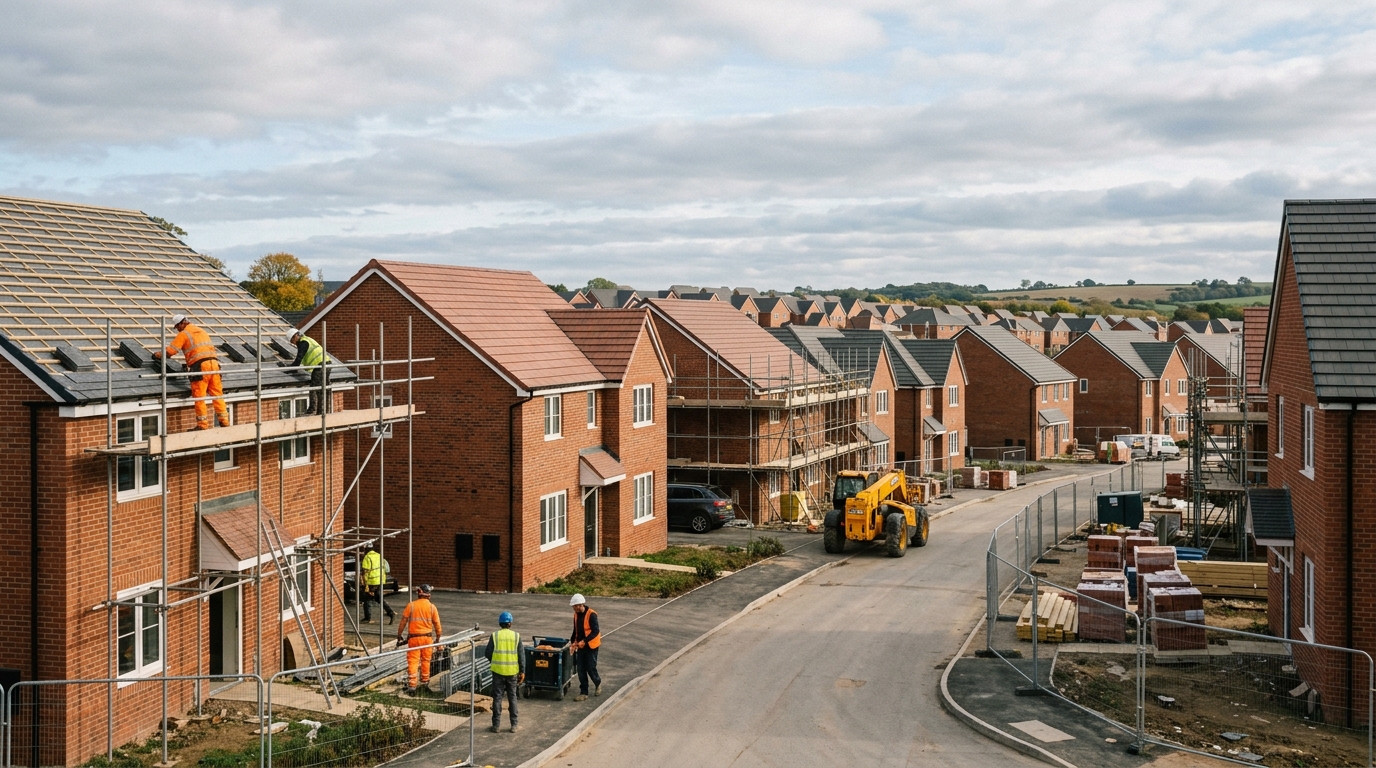
Lennar is the second-largest public homebuilder in the United States. It builds single-family homes, runs a mortgage and title business, and has spent the last several years reshaping its balance sheet. The company now controls about 98% of its homesites through options rather than buying land outright, a model that lowers the cost of capital and lets it build at a steady pace. From 2018 to 2026, owned homesites fell from about 174,000 to about 11,000, while controlled homesites rose from about 69,000 to about 486,000.
The risk: the approach forces Lennar to more closely evaluate pause risk, project duration and changing market conditions when negotiating new land deals, with the cost of both debt and equity capital becoming a much bigger internal focus. Land-bank option maintenance fees are rising.
Key Numbers
- Book value per share: approximately $90, with stockholders’ equity of roughly $21.6 billion.
- Stock price vs. book: trading at a price-to-book ratio of about 0.9.
- Q3 gross margin: 15.8%, improving sequentially as incentives on delivered homes declined to 12%.
- Balance sheet: homebuilding cash of $1.2 billion, debt-to-capital of 16.6%.
- Buybacks: since 2018, Lennar has repurchased $9.6 billion in stock and retired $6.9 billion in senior notes.
- Q4 guidance: 22,000 to 23,000 deliveries, gross margin of 15.5% to 16%, EPS of $1.30 to $1.65.
Is It Cheap?
The stock trades below book value, which does not happen often for a builder with Lennar’s scale and a $3.1 billion revolving credit facility. Lennar’s average forward price-to-earnings ratio has run around 10.2 times since 2020, compared with 15.1 times for NVR and 19 times for the S&P 500. Analysts project adjusted earnings to expand from $5.54 in fiscal 2026 to $17 in fiscal 2030. Berkshire’s average cost this month was between $74.80 and $79.41, per TipRanks. At $80, you are buying the same shares Greg Abel bought, below book.
Bull / Base / Bear
Bull: Rates fall to 6.5% or below in 2027. Order volumes recover. The asset-light model delivers the higher return on equity management has been promising. The stock re-rates to 12 to 13 times earnings and you double.
Base: Rates stay sticky in the 7% range through mid-2027. Lennar grinds out 80,000 to 83,000 deliveries per year, buys back stock below book, and the multiple stays compressed. You collect the buyback yield and wait.
Bear: In many markets, management said nearly 50% of visitors could not immediately qualify for a mortgage. If that worsens, orders fall further, land-bank option fees bite margins, and the stock tests $65 to $70.
Action Plan
This is a scale-in situation, not a full-position purchase. The macro headwind is real, and Case-Shiller data this morning will tell you whether existing home prices are still propping up Lennar’s new-home pricing floor.
- Start with a half position at current levels, in line with Berkshire’s average entry around $75 to $79.
- Add a second tranche if LEN retests the 52-week low near $75.70.
- Set your stop below $65. A break there means the order environment has deteriorated beyond what the balance sheet can buffer.
Cheap Investor Checklist
- Trades below book value ($90 per share): Yes
- Debt-to-capital below 20%: Yes, at 16.6%
- Active buyback below book: Yes, $256 million in Q3 alone
- Berkshire buying at or below current price: Yes
- Asset-light model: about 98% lots controlled, not owned
- Q4 orders guidance reduction: Watch for 19,500 to 20,500 range
- 30-year mortgage rate direction: Key trigger; below 7% changes the math significantly
- Land-bank option fee growth: Monitor in next earnings call
- Analyst consensus: Broadly cautious, 19 analysts average “Hold”
Bottom Line
If mortgages stay above 7.5% through 2027, this is a slow grind with buybacks as the return driver. If rates break meaningfully lower, you own a sub-book builder with 486,000 controlled lots and Berkshire at your side. The position Berkshire built at $75 to $79 makes that second outcome look worth the wait.