September 16, 2026
Bonus Content: Sysco Sold Stock at $81 to Fund a $29 Billion Deal. Is That Your Entry Point?
Below is an important message from one of our highly valued sponsors. Please read it carefully as they have some special information to share with you.
Dear Reader,
A small-cap gold exploration stock trading near $2…
The estimated resource value runs into the hundreds of billions of dollars.
Based on the company’s current filing timeline, a formal resource announcement is expected on or around September 30 — a disclosure that could reprice this stock significantly relative to its peers.
Early-stage positioning ahead of a major resource confirmation is the kind of asymmetric setup that rarely surfaces at current entry levels.
See the full briefing on this deposit and what the filing shows.
Regards,
Jim Rickards
Sysco Sold Stock at $81 to Fund a $29 Billion Deal. Is That Your Entry Point?
Hey there, bargain hunter. Sysco just handed the market a marked-down price sticker on its own shares. The question is whether that sticker reflects a clearance sale or a warning label.
Scoreboard
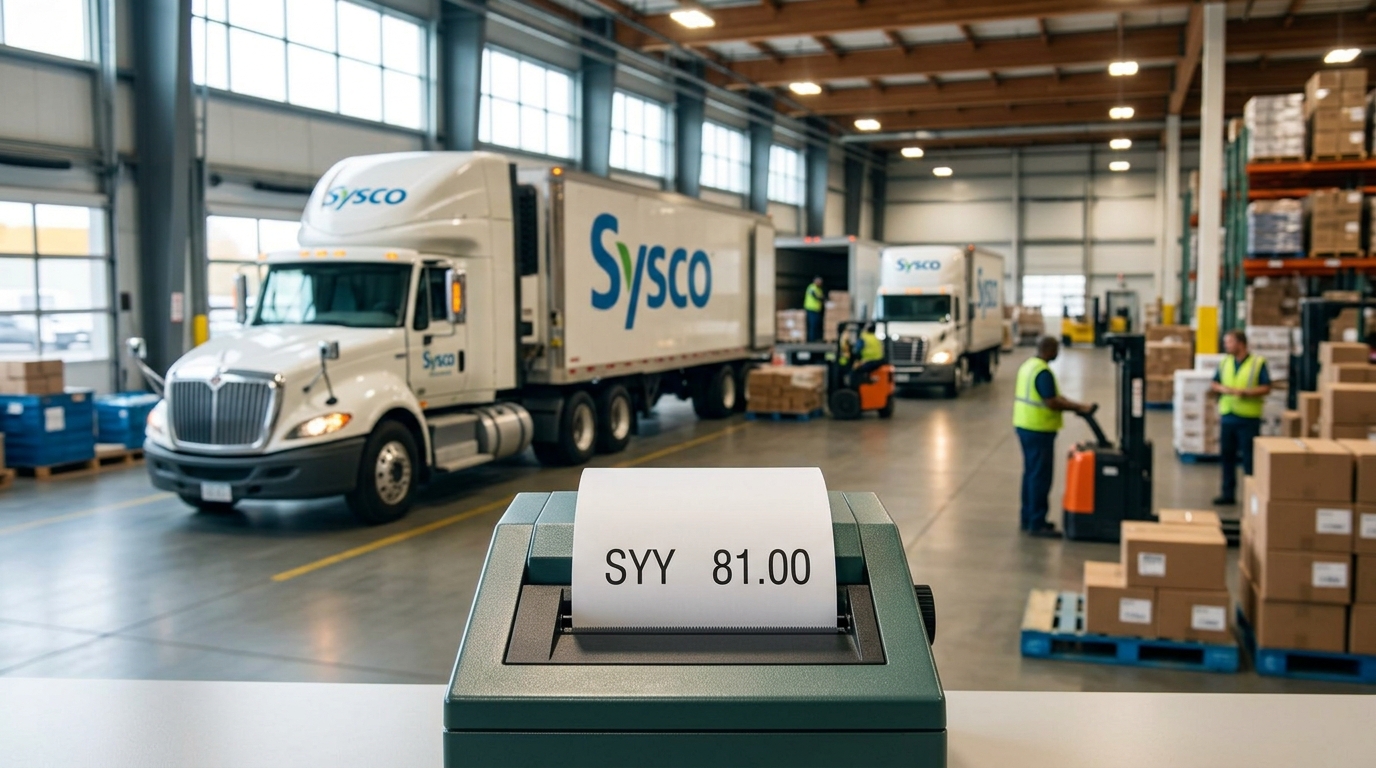
The 12,345,679-share offering priced at $81.00 per share, roughly 3% below the prior close of $83.54. The offering is expected to close today, September 16, 2026, subject to customary closing conditions. Underwriters also hold a 30-day option to buy up to an additional $150 million of shares at the same price. Shares fell on Tuesday alongside the announcement. Not a vote of confidence. Not yet panic either.
What Actually Happened
The transaction is valued at $29.1 billion, funded with $21 billion of new debt and hybrid debt, plus $1 billion of cash on hand, equity, or equity-linked securities. This offering covers that equity slice. Upon closing, Sysco will also issue approximately 19.1% of its outstanding shares to Jetro Restaurant Depot shareholders, who are expected to own roughly 16% of Sysco’s outstanding common stock. So you have dilution from the offering and dilution from the deal consideration. Two bites from the same apple.
Sysco has also halted its share repurchase program, prioritizing balance sheet repair with a stated intention to reduce net leverage by at least 1.0x within the first 24 months post-close. That removes a consistent source of demand for the stock at the same moment the company is issuing new shares at a discount.
What the Business Actually Is
Jetro Restaurant Depot operates a wholesale cash-and-carry model, where customers pay upfront for goods such as food, beverages, and takeaway containers, complementing Sysco’s delivery network serving restaurants, hospitals, and hotels. It runs 166 large-format warehouse stores across 35 states, generating about $16 billion in annual revenue and about $2.1 billion in EBITDA. That 13% EBITDA margin is above Sysco’s standalone 5.2%. The math on paper looks good. The math on debt service is the harder test.
The Numbers That Matter
- Sysco generated more than $84 billion in sales in fiscal year 2026, ending June 27, 2026.
- Net debt to adjusted EBITDA stood at 2.80x pre-deal and is estimated to reach about 4.5x at close.
- Sysco expects the deal to be mid- to high single-digit accretive to EPS in year one, and low to mid-teens accretive in year two, with roughly $250 million in annualized net cost synergies within three years.
- Pro forma, revenue rises roughly 20%, adjusted EBITDA roughly 45%, and free cash flow roughly 55%.
- Fiscal 2027 standalone guidance calls for 6% to 7% sales growth and 9% to 11% adjusted EPS growth.
- SYY closed at $83.21 on September 11, 2026, before the offering was announced. The $81 trade is a real discount to that.
In case you missed it… make sure you get your free “Simple Options Trading For Beginners” book before your link expires.
I eventually plan to charge money for this training, so do yourself a favor and download it now…
That way, no matter what it costs in the future, you’ll have a free copy.
Sound good?
Is It Cheap?
At current levels, SYY carries a forward P/E of roughly 16.5x, reasonable for a low-beta defensive distributor with buybacks on pause. The offering price of $81 is well below the 52-week high of $91.85. That gap is the argument bulls are making.
Bears point to the debt load. The transaction relies heavily on debt financing, with roughly $21 billion of new debt and hybrid instruments backed by a $22 billion senior unsecured bridge facility. This significantly increases financial leverage, with the actual impact depending on permanent financing terms and combined cash generation. Interest costs on $21 billion are not small, and they arrive precisely when borrowing costs remain elevated.
Sysco is not the only consumer-facing company right now where an appealing headline yield or valuation multiple is doing battle with a leverage ratio that demands scrutiny. our breakdown of how Pernod Ricard’s 3.8x debt load complicates an otherwise cheap-looking stock walks through the same framework: what the income statement promises, and what the balance sheet can actually deliver when rates stay elevated.
Bull / Base / Bear
Bull: Synergies hit ahead of schedule. Restaurant Depot has grown revenue in 28 of the last 30 years and carries 90%+ free cash flow conversion. Leverage falls from 4.5x to 3.5x within two years, buybacks resume, and EPS grows into the low-teens accretion target.
Base: Integration takes longer than guided. Synergies arrive by year four, not year three. The stock grinds sideways as the market waits for delevering proof.
Bear: If the economy slows or restaurant traffic softens, the math behind those mid- to high-single-digit EPS gains gets much tougher, especially if Sysco has to keep prices sharper than planned to fend off competitive pushback. At 4.5x leverage, there is limited room for error.
The tension between a compelling growth story and a debt structure that punishes any miss is a recurring theme in today’s market. how to separate a genuine bargain from a highly leveraged bet on flawless execution applies that same lens to CoreWeave — a useful read for anyone calibrating how much execution risk they are willing to price in before sizing a position.
Action Plan
The $81 offering price is the line in the sand. If you were already comfortable owning SYY, buying near that level alongside the institutional book is a defensible position. Scale in: a third now, a third if the stock tests the $79 to $80 range during the offering overhang, and a third after the deal closes and management provides its first post-close leverage update.
If you own USFD or PFGC as a foodservice alternative, this deal reshapes the competitive landscape. Sysco at scale with a cash-and-carry arm serving independent restaurants is a different animal.
Cheap Investor Checklist
- Offering closes at $81 today: watch whether SYY holds above that level in the coming sessions
- Track leverage quarterly: management targets about 4.5x at close, with at least a 1.0x reduction within the first 24 months post-close
- Synergy clock starts at close: $250 million annualized by year three is the key number
- Buyback resumption is the signal: no buybacks means the dividend ($0.55 per quarter) is the only direct return to shareholders
- Watch Restaurant Depot comp volume: recent trend was 4% growth; any decel is a warning sign
- Antitrust clearance still pending: Hart-Scott-Rodino review is a binary risk before any of this matters
Bottom Line
If the synergies land and leverage falls on schedule, buying SYY at $81 alongside the institutional offering will look like a reasonable entry on a business that just doubled its addressable market. If interest costs bite harder than modeled or restaurant demand softens, $21 billion of debt will be a weight the earnings growth cannot lift fast enough. This is a high-conviction bet on execution, not a margin-of-safety buy. Size accordingly.