
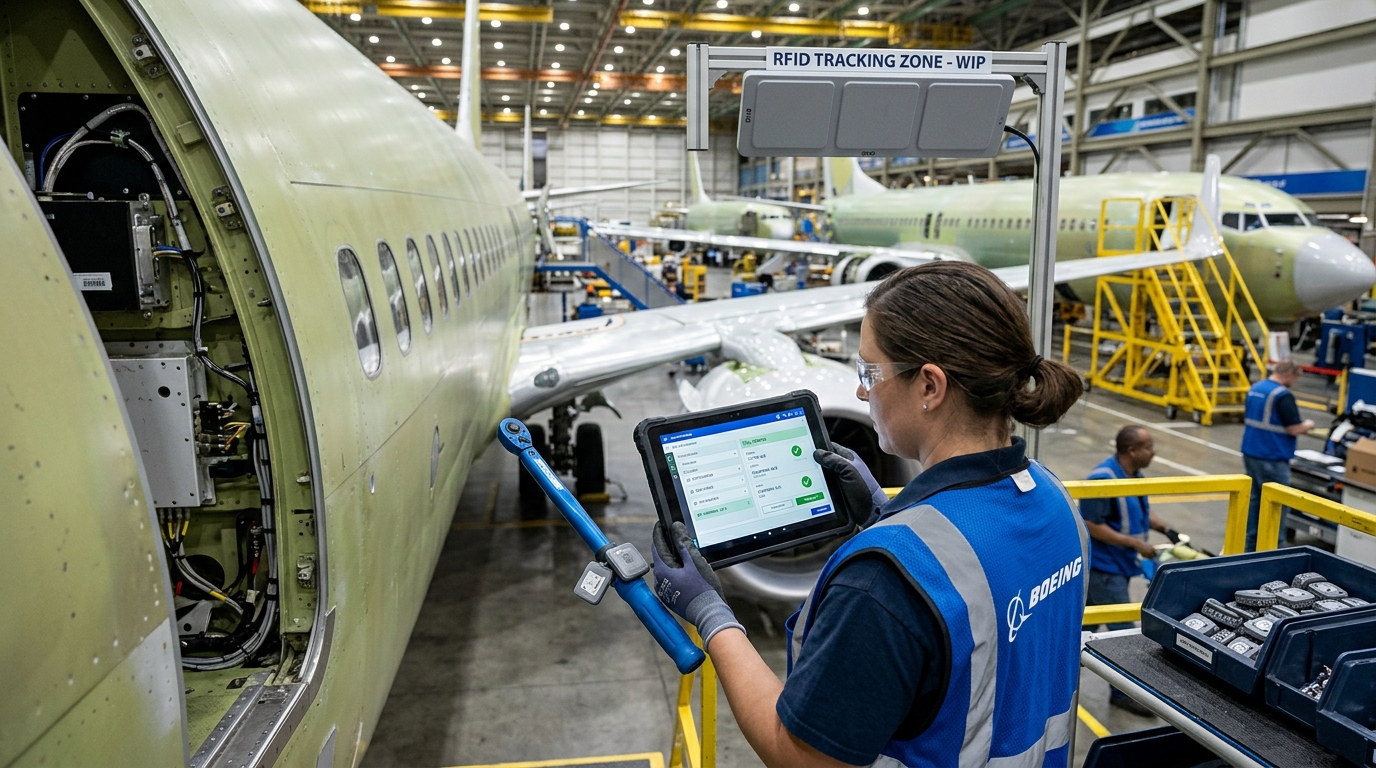
The most consequential thing Boeing has done in the past two years is not a design change. It is a data system.
Boeing launched a tool control RFID pilot on the 737 and 787 programs, adding unique RFID tags to thousands of tools, and simultaneously implemented a new Work in Process system across all Commercial Airplanes final assembly areas to track and secure parts for manufacturing work that is not yet complete, preventing loss or improper use. Those two software measures, quiet by headline standards, turned out to be exactly what federal regulators needed to see before authorizing a production ramp that had been constrained since the Alaska Airlines door plug incident in January 2024.
After two years of strict oversight and production limits, Boeing said in late May 2026 that it had met FAA requirements to increase 737 MAX production to 47 jets per month, up from 42, after passing a capstone review. Ortberg noted it would take a few months to stabilize at that rate before the line continues upward. The longer-term target is steeper: 53 aircraft per month by year-end, the threshold Boeing’s own planning identifies as necessary to begin reducing a backlog of more than 4,800 orders.
The investment angle here is not the delivery count. It is what the software transition reveals about Boeing’s cost structure going forward. Defects in 737 fuselage assembly at Spirit AeroSystems fell by an average of 45% since March 2024 through increased inspection points and a customer quality approval process. Fewer defects mean less rework, and less rework means the company can finally convert production volume into revenue without the margin-destroying traveled work that defined the 2023 and 2024 lines.
On July 17, 2026, the FAA announced Boeing may resume issuing airworthiness certificates for all 737 MAX and 787 Dreamliner aircraft, returning a critical production function to the manufacturer after years of heightened regulatory involvement. That is the certification authority Boeing needs to compress the gap between aircraft rolling off the line and aircraft handed to airlines.
The risk is speed. A wiring check slowed some second-quarter deliveries, and the industry is watching closely to see whether Boeing can prioritize throughput without sacrificing the quality stability it spent two years rebuilding. Software tracking of tools and parts creates an auditable record that regulators can scrutinize in real time. It also creates a paper trail that surfaces problems faster when they appear. At 47 jets a month, that is a feature. At 53, it becomes the test.