Start with the dividend math. Frontline declared a cash dividend of $2.61 per share for the second quarter of 2026. On top of that, the company announced plans for an additional special dividend of $0.80 per share following the sale of two 2017-built VLCCs for $270 million. For a stock that began this year trading near the low end of its 52-week range, those numbers are remarkable. The harder question: how long can they hold?
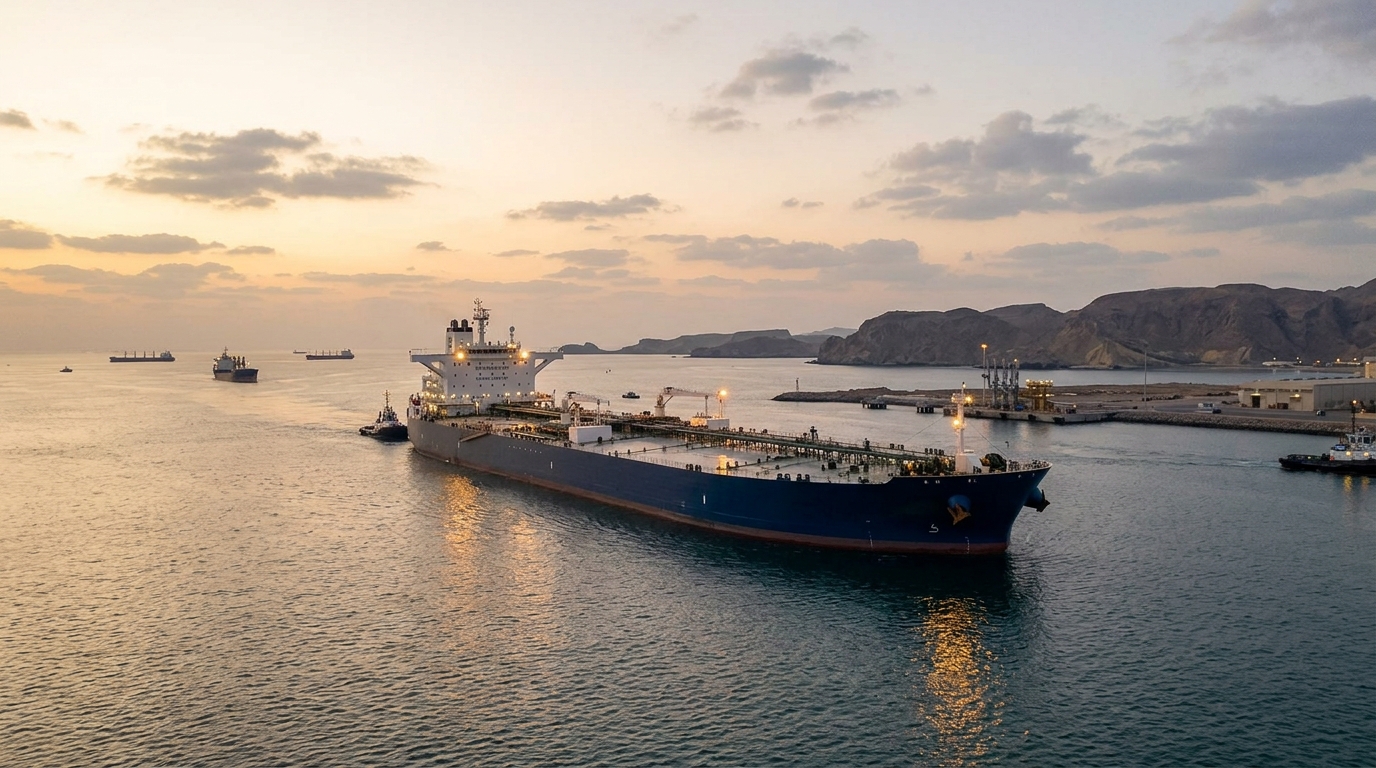
The market backdrop making all of it possible is equally striking. The TD3C route, measuring 270,000 metric tons from the Middle East Gulf to China, is assessed at about WS570. That is not a normal market. It is a market priced for sustained Strait of Hormuz disruption, and the disruption is real.
Frontline achieved average daily spot TCEs for VLCCs of $152,700, Suezmax of $111,500, and LR2/Aframax of $92,400 per day in the second quarter. Those figures translated directly into record results: the company posted its best quarterly profit ever at $659.2 million, or $2.96 per share, and its best adjusted profit ever of $580.2 million, or $2.61 per share.
The fleet finances itself at current rates many times over. Frontline estimated average cash break-even rates for the next 12 months of approximately $23,800 per day for VLCCs, $25,700 per day for Suezmax, and $22,200 per day for LR2/Aframax tankers. Even if spot rates fell by half, the business would still generate substantial free cash. Based on current fleet and average spot market rates as of August 28, 2026, the company’s cash generation potential is $2.3 billion, approximately $10.35 per share, providing a cash flow yield of 24%.
That cash generation figure is where the NAV conversation becomes interesting. CEO Lars Barstad noted on the Q2 earnings call that the market was pricing FRO at north of 1.3 times NAV, implying a vessel value actually higher than what the company achieved on recent sales. That premium exists because investors are paying for earnings power, not just asset value. If the war risk premium compresses, the NAV premium compresses with it.
The compression risk is not theoretical. Iranian Foreign Minister Abbas Araghchi and his Omani counterpart Badr Albusaidi discussed an “interim framework” aimed at resuming shipping through the Strait of Hormuz, according to a joint statement carried by the Oman News Agency on August 25. The initiative seeks to establish a “temporary joint maritime corridor” and a project for mine clearance to restore safe navigation through the area. A full reopening would almost certainly deflate the East-of-Suez rate premium that is currently embedded in WS570.
Frontline is not unaware of this. The company entered into two one-year time charter-out agreements for two VLCC newbuildings delivered on June 22, 2026 and July 3, 2026, at a rate of $120,000 per day per vessel. Locking charters at $120,000 when spot is far higher looks conservative, but it reflects a deliberate hedge: guaranteed income that covers costs many times over if geopolitics shift. CEO Barstad stated that reducing leverage is not part of Frontline’s DNA, and the company’s strategy is to cover roughly one-third of revenues and key costs, with the recent time charters described as opportunistic.
For Q3, Frontline has secured 86% of VLCC spot days at $156,900 per day, 79% of Suezmax days at $117,400 per day, and 70% of LR2/Aframax days at $81,000 per day. That coverage insulates near-term income. The variable is Q4 and beyond, where the market price of Hormuz risk will determine whether $2.61 quarterly dividends become the floor or the ceiling.
Frontline’s recent dividend increase and strong adjusted profit are closely tied to an unusual period in tanker markets driven by disrupted trade routes. Income-focused investors may want to view the current yield as cyclical and be prepared for payouts to adjust if freight markets or route patterns normalise. The dividend is earning its keep today. Investors should understand exactly why, and exactly what would take it away.