
August 19, 2026
The Pause Is Not the Deal
Featured: The Pause Is Not the Deal
Hi,
Take a look at this…

It’s smaller than a fingertip…
It’s made of glass…
And it’s about to unlock the next wave of AI growth.
Jensen Huang, Nvidia’s CEO, says this “light-speed” device is shattering the limitations of AI… and without it, AI can’t scale.
Google Ventures says it’s the future of AI compute…
And Sequoia Capital – the firm that backed Anthropic and OpenAI – calls it a “holy grail.”
Already, Elon Musk, Mark Zuckerberg, Cathie Wood, and Bill Gates are moving money to prepare for what’s coming…
Yet most Americans have never heard of it.
Wall Street insider Jason Bodner – the same man who called Nvidia at $4.50 – says this device is about to launch a whole new wave of AI winners…
And to prove it, he’s giving away his #1 stock involved with it – for free.
Click here to learn more. (No purchase necessary.)
We have so much to look forward to,
Jeff Brown
Founder & CEO, Brownstone Research
P.S. Stocks tied to this “light-speed” device already surged 133%, 217%, and even 320% – in a few short months. But it’s just getting started. Click here before the mainstream catches on.
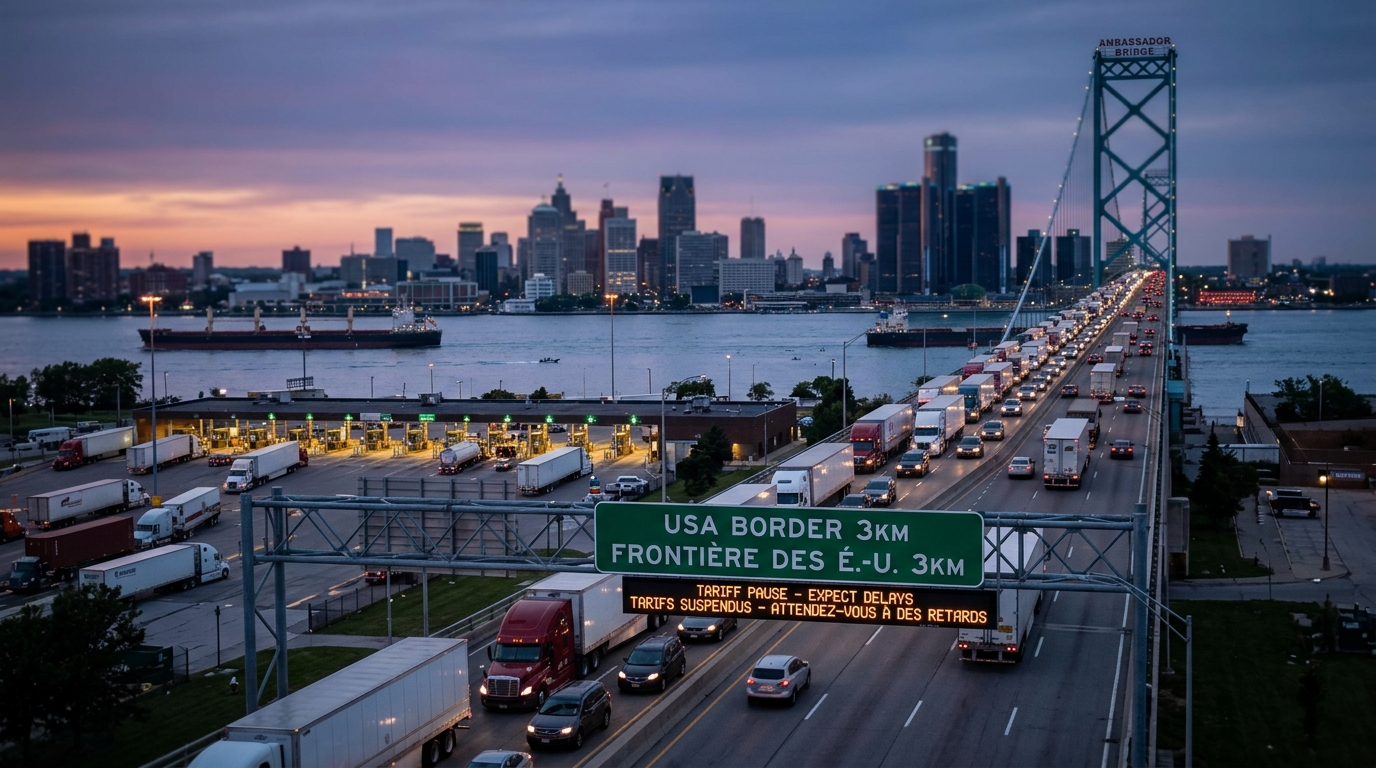
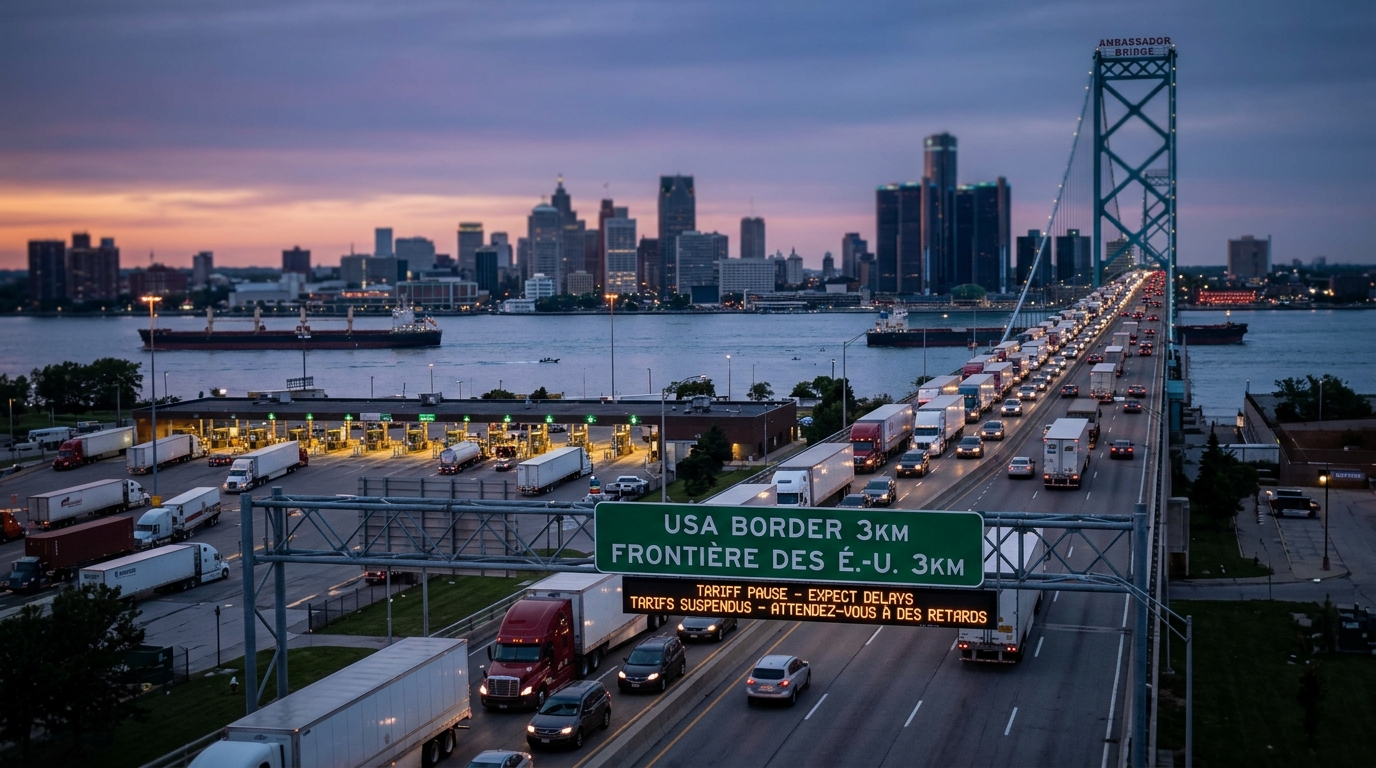
Hey there, bargain hunter. Less than two hours before the August 19 midnight deadline, the White House paused its 50% tariffs on Canadian goods for 72 hours, citing a deal pending finalization. Prime Minister Mark Carney confirmed the delay holds until end of day August 21 and called progress “substantial” while also noting “important work still to be done.”
That is a politician’s way of saying: nothing is signed.
The Weapon Nobody Had Used Before
Most coverage skipped the important part. Section 338 of the Tariff Act of 1930 is a provision that sat untouched for nearly a century until July 20, 2026, when Trump signed three separate proclamations invoking it against Canada. The administration cited three specific grievances: provincial liquor-board restrictions on U.S. alcohol, Canada’s supply-management quota system for dairy, and a roughly 22% drop in Canadian imports of U.S. motor vehicles between April 2025 and March 2026, worth about $5.6 billion.
The tariffs cover nearly $20 billion in annual Canadian imports. They apply at a flat 50% rate, on top of all existing duties. USMCA provides zero relief: a valid certificate of origin exempts nothing. Carve-outs exist only for energy, potash, fish, and critical minerals. And unlike Section 122, which carried a 150-day ceiling and expired July 24, Section 338 carries no expiration date. These tariffs could stay in force indefinitely.
That’s why bargain hunters need to distinguish between a company that is actually impaired and one temporarily being discounted because of a macro headline.
The best opportunities often appear when Wall Street’s earnings expectations and the price investors are willing to pay move in opposite directions. Tariff uncertainty can create exactly that kind of disconnect—but only when the underlying earnings remain intact.
What the Pause Actually Buys
The 72-hour extension avoids, for now, Canadian retaliatory tariffs that Ottawa had threatened if the Section 338 duties went live. That counter-escalation threat coming off the table is what moved the Canadian dollar. But the proclamations themselves remain in place. A pause is not a suspension. A side-letter commitment is not a treaty.
Trump’s Truth Social post also referenced Keystone XL, the crude pipeline killed by Biden in 2021 that would have carried up to 830,000 barrels per day from Alberta to Nebraska. Section 338 is the stick. Keystone XL is the carrot. The administration is also using this pressure to reshape USMCA terms outside the formal dispute process, which is Section 338’s real strategic value: leverage with no procedural guardrails.
The Investor Read
Do not add into the relief rally on Canadian-exposed industrials, dairy, or auto-adjacent names. The Section 338 authority does not expire on Friday regardless of outcome. The cleanest exposure remains Canadian energy: oil, potash, and critical minerals are explicitly excluded from all three proclamations, and Canada ships roughly 4.4 million barrels per day to U.S. refiners. That flow was never at risk here.
La-Z-Boy is a good example of why tariff mitigation belongs in the valuation conversation: a low earnings multiple only remains attractive if the company can defend the margins supporting those earnings.
The cleanest exposure remains Canadian energy: oil, potash, and critical minerals are explicitly excluded from all three proclamations, and Canada ships roughly 4.4 million barrels per day to U.S. refiners. That flow was never at risk here.
That carve-out matters downstream as well.
Phillips 66 shows why refiners can behave very differently from crude producers when energy markets get volatile. Refiners care about feedstock costs and crack spreads, not simply whether crude rises or falls. Keeping Canadian energy outside the tariff regime therefore removes one potentially disruptive variable from the refining economics.
On USD/CAD: strategists at Monex Europe have cited 1.37 as the bull target for a lasting, documented agreement. A three-day extension is not that. Fade the initial CAD strength unless something is actually signed.
Bottom Line
If formal documentation surfaces before August 21 and the Section 338 proclamations are suspended, the relief trade in Canadian equities and CAD is real. If the clock runs out and another extension is announced, treat it as a ceasefire. The legal weapon that made this fight possible carries no expiration date and sits ready for the next dispute. The real question is not whether tariffs hit this week. It is whether North American supply chain economics have permanently changed, and whether the companies you own have priced that in.
They almost certainly have not.