August 10, 2026
Abel Is Spending. Burry Is Not Impressed.
Berkshire’s operating businesses are performing. The capital allocation debate is only getting louder.
First a note from InvestorPlace Media
Editor’s Note: When Luke Lango worked in venture capital, he crossed paths with some of the biggest names in the startup space. One of them – a legend who invested in more than 10 unicorns – went on to back Luke’s first startup. Today, Luke takes the secrets of Silicon Valley and shares them with over one million everyday investors around the world. His latest discovery involves China, Elon Musk, and a 100-million-square-foot Texas facility that could bring the world’s most vital commodity back to America. Read below for more details…
Dear Reader,
The U.S. weapons shortage is getting serious.
According to Reuters, “the US has used ‘virtually all’ of its long-range precision missiles during the Iran War.”
The Center for Strategic and International Studies maintains that we have enough missiles to continue fighting in Iran…
But they say the true danger is “a future conflict in the Western Pacific against China.”
Since the start of the decade, China has been ramping up its efforts to take back Taiwan.
In fact, these days it’s not unusual to find five or six Chinese warships circling Taiwan.
If China decides to invade Taiwan tomorrow, America may not have the munitions to adequately defend it.
US Treasury Secretary Scott Bessent recently outlined the ramifications of a military invasion, and the implications are grim…
“The single biggest threat to the world economy, the single biggest point of single failure, is that 97 percent of the high-end chips are made in Taiwan. If that island were blockaded, that capacity were destroyed, it would be an economic apocalypse.”
Advanced chip manufacturing must be reshored in America, and I believe Elon Musk will be the one who makes it happen. (I break down his ingenious plan to reach this seemingly improbable goal here.)
His plan revolves around a mysterious new facility that recently broke ground in Texas.
The Terafab – as Elon is calling it – will be 3X the size of Central Park…
It will cost $122 billion to build.
And, according to Yahoo! Finance, it “targets 1 terawatt of annual chip output.”
That means this one plant could singlehandedly double American chip production…
Dramatically reducing our dependence on China and Taiwan…
And creating an explosive money-making opportunity for investors who get in now.
I’ve run the numbers myself.
The total addressable market of Elon is a whopping $126 trillion, 2X bigger than AI, robotics, clean energy, and driverless cars combined.
I recently stepped in front of camera and revealed the name and ticker of my #1 way play this radical shift…
Alongside my three-step plan to profit from this shift.
Regards,
Luke Lango
Senior Technology Analyst, InvestorPlace
P.S. Recent drone flyovers of the first part of Elon’s Terafab plan revealed that progress has “hit another gear.” That’s no surprise to folks who follow Elon. They know he moves fast. But the way he achieves this goal will shock even his biggest fans. Get the full story on Elon’s $126 trillion bombshell here.
Abel Is Spending. Burry Is Not Impressed.
Hey there, bargain hunter. Here is a question worth sitting with before we get into the numbers: how much of Berkshire Hathaway’s market premium was ever really about the businesses, and how much was about the man deciding what to do with them?
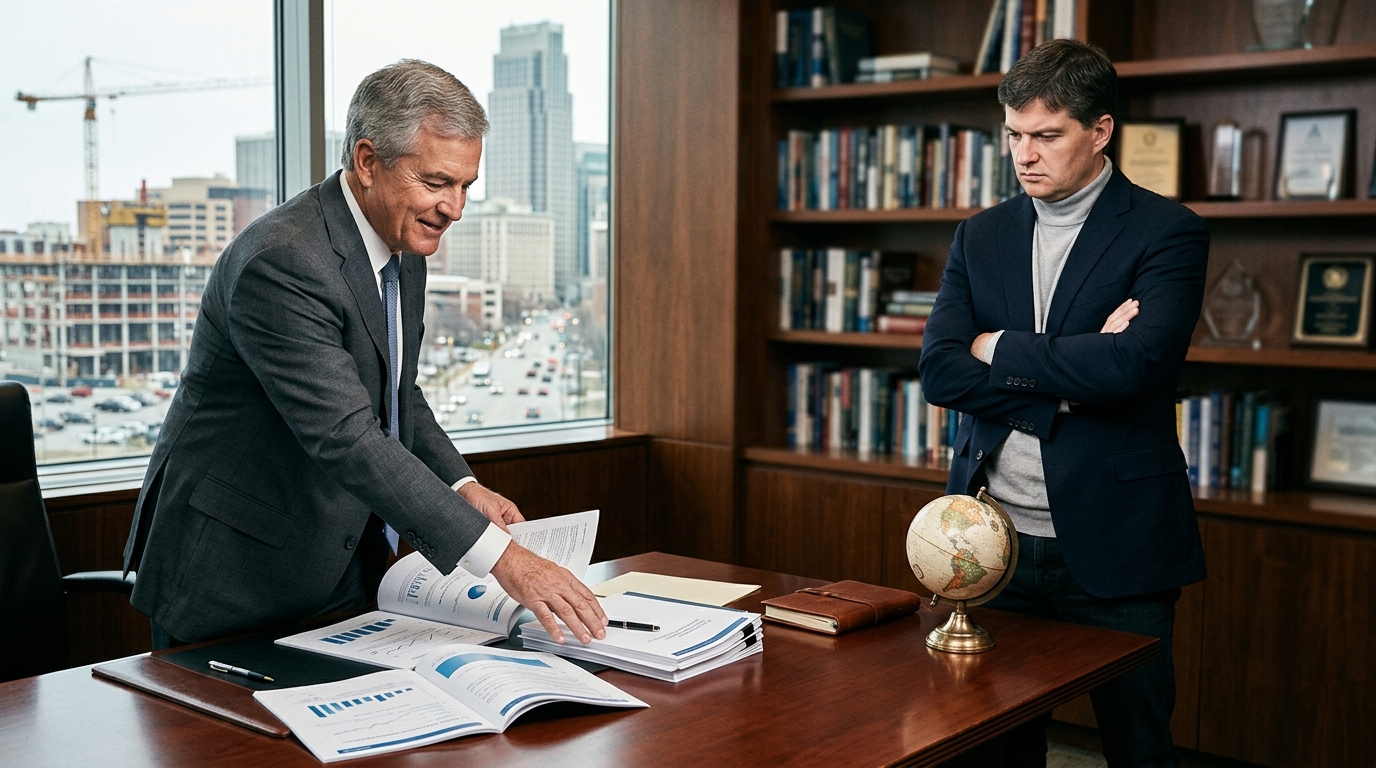
That question has been dormant for years, because Warren Buffett and Berkshire were inseparable in most investors’ minds. Now they are not. And on August 9, 2026, Michael Burry made his answer public.
He no longer finds Berkshire an attractive investment.
The Scoreboard
Let us start with what actually happened, because the Q2 numbers are better than the stock’s year-to-date performance suggests.
- Operating earnings: $12.98 billion in Q2 2026, up 16% from $11.16 billion a year earlier. First-half operating earnings of $24.3 billion, up from $20.8 billion in 2025.
- Net earnings: $25.67 billion for the quarter, compared with $12.37 billion in Q2 2025. The jump was driven partly by $10.9 billion in unrealized equity gains flowing through the income statement under post-2018 accounting rules.
- Cash pile: $365.5 billion as of June 30, down from a record $397.4 billion at the end of Q1. First sequential decline in four years.
- Buybacks: $4.5 billion in Q2, a sharp acceleration from just $235 million in Q1 2026.
- Equities: Berkshire became a net buyer for the first time in 14 consecutive quarters, accumulating roughly $20 billion in net equity purchases.
- Total revenues: $101.8 billion in Q2 2026, up 10% year over year.
- Shareholders’ equity: $747.9 billion at June 30, 2026, up $30.5 billion since year-end 2025.
- BRK.B stock performance: Up roughly 3% year-to-date versus a 13% gain for the S&P 500.
The businesses are running well. The stock is not keeping pace. That divergence is the entire debate.
What Actually Happened: Expectations vs. Reality
Buffett handed Greg Abel the keys on January 1, 2026, along with a cash pile of roughly $381.7 billion and a stock portfolio worth around $314.6 billion. The market expected Abel to be deliberate, patient, and conservative. That was the safe read, because Buffett trained him for 25 years and publicly endorsed his judgment.
What the market got instead was velocity. In seven months, Abel closed the $9.7 billion OxyChem acquisition from Occidental, completed the $6.8 billion Taylor Morrison homebuilder deal, made a $10 billion equity commitment to Alphabet, bought back $4.5 billion of Berkshire stock in a single quarter, and swung the equity portfolio from net seller to net buyer. Together, these moves represent a meaningful shift in posture, and they all arrived at a moment when the S&P 500 was trading near record levels.
Burry’s reading is straightforward: Abel is proving he can deploy capital, not that he is deploying it wisely. The market seems to agree, at least for now. The 10-point underperformance gap versus the index is the market’s way of saying the Buffett premium has not transferred.
The Business: How Berkshire Actually Makes Money
Berkshire is not a fund. It is a capital allocation engine attached to a collection of operating businesses that generate the cash the engine needs to run.
Insurance is the flywheel. The float, premiums collected but not yet paid out as claims, gives Berkshire a pool of investable capital that costs close to nothing when underwriting is profitable. That float stood at approximately $176.9 billion as of March 31, 2026. It is the reason Buffett’s returns looked superhuman for decades: he was investing other people’s money at a near-zero cost of capital.
The non-insurance businesses provide the earnings base. BNSF is one of the two largest freight railroads in North America. Berkshire Hathaway Energy operates regulated utilities across multiple states. The manufacturing, service, and retailing segment includes dozens of companies spanning industrial products, consumer goods, and distribution. OxyChem, acquired January 2, 2026, adds a top-three U.S. manufacturer of polyvinyl chloride, chlor-alkali, and chlorinated organic chemicals. Taylor Morrison, acquired July 24, brings residential construction to the portfolio for the first time at scale.
The equity portfolio, led by Apple, American Express, Bank of America, Coca-Cola, and now Alphabet, provides a layer of compounding on top of the operating earnings. Add it all together and you have one of the most durable, diversified cash-flow machines in the history of public markets. The question is not whether the machine is good. It is whether you are paying too much for the person operating it.
The Data
Segment by segment, here is what Q2 2026 actually showed:
- Manufacturing, service, and retailing: Operating earnings up 24% to $4.47 billion.
- Berkshire Hathaway Energy: Profit of $891 million, up 27% year over year.
- BNSF railroad: $1.56 billion in operating earnings, up 6%.
- Insurance underwriting: Earnings fell 13% to $1.73 billion, down from $1.99 billion a year earlier.
- Insurance investment income: $3.06 billion, down 9%.
- Net income per Class A share: $17,868 in Q2 2026, versus $8,601 in Q2 2025.
- OxyChem (acquired January 2, 2026): $9.7 billion purchase price from Occidental. Top-three U.S. manufacturer in chlor-alkali, PVC, and calcium chloride, with 21 domestic manufacturing sites and operations in Canada and Chile.
- Taylor Morrison (acquired July 24, 2026): $6.8 billion. Residential construction, a sector benefiting from structural housing supply constraints.
- Alphabet stake: Approximately $10 billion commitment. Now a top-five equity holding by market value alongside Apple, American Express, Bank of America, and Coca-Cola.
The underlying business strength is not in question. Four of five operating segments grew meaningfully. Insurance is the weak spot, and it matters more than the headline numbers suggest. We will get to that in a moment.
“Something Worse Than a Crash is Coming October 27th”
The man who announced “historic volatility is coming” 3 months before the 2025 crash and rally has a new prediction. He now says he’s not predicting another tariff crash – a recession – or anything of the kind. Instead, he has a far more peculiar warning for the rest of 2026.
Click here for his full blueprint and 5 free recommendations.
Is It Cheap?
Berkshire is not cheap in the classic value investor sense. It never has been. The stock has historically commanded a premium to book value because the sum-of-parts analysis understates the compounding power of the float and the optionality embedded in a massive cash reserve managed by a disciplined allocator.
The relevant question is whether the premium is justified at current prices under current management. BRK.B is up 3% in 2026 while the index is up 13%. That underperformance has compressed the valuation gap between Berkshire and the broader market, which on the surface looks like an improvement in relative value. But it may not be. If the Buffett premium is permanently impaired, the stock’s historical price-to-book range and price-to-operating-earnings multiples are not reliable anchors.
The more grounded way to frame it: you are buying $365.5 billion in cash and Treasuries, a $176.9 billion insurance float that generates investable capital at near-zero cost, and a collection of operating businesses that earned $24.3 billion in the first half of 2026. You are paying a significant premium for the capital allocation judgment of a CEO with seven months on the job in one of the most overvalued equity markets in recent memory. Whether that premium is justified depends almost entirely on what Abel does over the next three to five years, not the next two quarters.
Bull, Base, and Bear
Bull case. Abel’s Q2 moves reflect considered conviction, not panic deployment. The Alphabet stake was initiated with Buffett’s explicit blessing and ties Berkshire to AI infrastructure at a moment when that exposure is increasingly difficult to access at reasonable prices. OxyChem is a classic Berkshire acquisition: essential chemistry, durable demand, defensible market position. Taylor Morrison bets on a structural housing shortage that has not resolved itself despite two years of elevated mortgage rates. If any of these bets pays off at scale, and if Abel demonstrates patience in the next downturn, the Buffett premium re-attaches to a new name. The operating earnings base of roughly $48 billion annualized is already a powerful foundation.
Base case. Abel is a competent operator who will grow operating earnings at mid-single digits annually, deploy capital at reasonable but not exceptional prices, and run the conglomerate efficiently. BRK.B compounds at roughly the rate of the overall market, in line with what large-cap diversified conglomerates typically deliver when stripped of a singular capital allocation genius. The stock neither collapses nor meaningfully outperforms. Buffett’s premium compresses slowly over several years.
Bear case. The bear case is not that Abel is incompetent. It is structural. Berkshire, with $365.5 billion in cash and a shareholders’ equity base of $747.9 billion, faces a problem no CEO can fully solve: the universe of investments that can meaningfully move Berkshire’s return profile is vanishingly small. Buffett had both the discipline to wait for distressed prices and the reputation to attract proprietary deal flow. Abel is untested on both counts. If he deploys the remaining cash pile into a market that subsequently corrects, and if GEICO’s competitive position continues to erode, the stock’s implied premium will look expensive in hindsight. Burry’s concern, stated plainly, is that the fear has already materialized.
What Investors Are Missing: The Float Problem
The entire public debate about Abel’s capital allocation is obscuring the most consequential variable in the Berkshire investment case: the insurance float.
That $176.9 billion pool of near-zero-cost investable capital is the engine behind every exceptional return Berkshire has generated. It works only when underwriting is profitable. Insurance underwriting earnings fell 13% in Q2. Investment income from insurance operations dropped 9%. These are not rounding errors.
The deeper problem is competitive. Progressive has surpassed State Farm as the largest private auto insurer in the U.S. by trailing-12-month premiums, a position GEICO once aspired to hold. Progressive’s private auto premiums grew 11.6% over the trailing 12 months ended March 31, 2026. GEICO, by contrast, has spent recent years prioritizing profitability over growth, increasing advertising spending in an attempt to regain share after years of retrenchment. Progressive now holds 17% of the U.S. auto insurance market. GEICO sits at 12%.
Progressive’s structural advantages are not trivial. Its telematics capabilities, direct-to-consumer channel, and pricing infrastructure allow it to adjust rates faster than most rivals. GEICO is not broken, but it is competing from a position of relative weakness in the most data-intensive period in auto insurance history.
If GEICO’s policy count stagnates while Progressive compounds at 11% annually, Berkshire’s float growth slows. The cost-of-capital advantage that underpinned Buffett’s returns quietly erodes. Nobody in the Abel-versus-Burry debate is spending much time on this. They should be.
The Action Plan
For existing holders: Hold, do not add aggressively. The operating businesses are performing, the balance sheet is fortress-grade, and the valuation has already cheapened relative to the S&P 500 through underperformance. But the premium you are paying for capital allocation judgment is unearned at this stage. Abel needs at least two to three years of evidence before that premium is justifiable. Trim if the position is oversized relative to your portfolio.
For prospective buyers: The patient entry point is a meaningful market dislocation, not the current environment. If the S&P 500 corrects 20% or more and BRK.B holds relatively better, as it historically has in downturns, the risk/reward improves substantially. Berkshire’s cash pile becomes an offensive weapon in a distressed market in a way it cannot be when equities are priced for perfection.
Scale-in framework: If you want exposure now, consider a partial position sized at 50% of your target, with a plan to add at $55 or lower on BRK.B (or the equivalent percentage decline on BRK.A). Set a three-year horizon minimum. Watch GEICO’s policy count quarterly. Watch whether Abel’s next major capital deployment comes at prices that reflect genuine discount, not market enthusiasm.
Progressive (PGR) as a complement: The GEICO competitive erosion is Progressive’s gain. Investors who want auto insurance exposure with a cleaner growth catalyst should consider PGR alongside or instead of BRK.B. Progressive’s 11.6% premium growth and structural pricing advantages make it a more straightforward compounder in the current environment, though it trades at a premium multiple that requires continued execution.
The Cheap Investor Scorecard: BRK.B
- Business Quality: Exceptional. Diversified across insurance, energy, railroad, manufacturing, and consumer. Revenue base of $195.5 billion in the first half of 2026. Few businesses of this scale and durability exist at any price.
- Financial Strength: Fortress. $365.5 billion in cash and short-term Treasuries. Shareholders’ equity of $747.9 billion. Zero dependence on external financing.
- Valuation: Fair to modestly elevated given the Buffett premium compression risk. Not cheap in absolute terms, but not expensive relative to operating earnings power.
- Competitive Position: Strong in most segments. Structurally challenged in auto insurance, where GEICO has ceded market share to Progressive and now holds 12% of the U.S. market versus Progressive’s 17%.
- Balance Sheet: No concerns. The cash pile alone exceeds the market capitalization of most S&P 500 companies.
- Cash Flow: $24.3 billion in operating earnings through six months of 2026. Annualized, that is roughly $48 billion. Best-in-class among diversified industrials.
- Management Execution: Unproven at scale under Abel. Seven months is not enough evidence. The moves so far are credible but not contrarian in the Buffett sense.
- Catalyst Strength: Weak near term. The next real catalyst is either a market dislocation that lets Abel deploy capital at genuinely distressed prices, or a GEICO turnaround that stabilizes float growth. Neither is imminent.
- Margin of Safety: Moderate. The cash pile provides a floor. The premium over intrinsic value is the ceiling. The gap between them is narrower than in prior years.
- Long-Term Potential: High, conditional on Abel demonstrating patience in the next downturn. If he earns his Buffett premium, the stock has room to re-rate meaningfully. If he continues deploying into ebullient markets, the premium compresses further and the stock becomes a market-rate compounder at best.
Stocks to Watch
- Berkshire Hathaway (BRK.B): The central debate. Operating earnings of $12.98 billion in Q2, up 16%. Capital allocation under Abel is active but unproven. The insurance float question is the most underappreciated risk in the story. BRK.B is lagging the S&P 500 by 10 points in 2026. That gap either closes when Abel makes a contrarian, large-scale bet in a market dislocation, or it widens if he keeps buying into strength.
- Progressive (PGR): The GEICO counter-trade. Progressive has surpassed State Farm as the largest U.S. private auto insurer by trailing-12-month premiums. Its private auto premium growth of 11.6% over the trailing year, combined with industry-leading telematics and a powerful direct channel, gives it structural advantages GEICO is still trying to close. If the insurance market softens, Progressive’s pricing discipline gives it more room to gain share at GEICO’s expense.
- Alphabet (GOOG): Now a top-five Berkshire equity holding after a $10 billion commitment initiated with Buffett’s blessing. Abel and Buffett explicitly tied the investment to AI infrastructure. Its performance over the next 18 months is the most visible real-time report card on whether Abel’s first major portfolio pivot was a disciplined bet or a chase into euphoria.
- Lennar (LEN) and D.R. Horton (DHI): Taylor Morrison delisted August 3 after the Berkshire acquisition closed July 24. Investors who want to assess Abel’s homebuilder thesis have the clearest proxies in Lennar and D.R. Horton, both operating in the same supply-constrained housing market Abel is betting on.
The Bottom Line
Here is the conditional read, stated plainly.
If Abel proves, over the next two to three years, that he will hold the cash until the market gives him genuinely distressed prices, and if GEICO stabilizes its competitive position against Progressive, then BRK.B deserves to trade at a premium to the market and the current underperformance is an entry point. The operating businesses are excellent, the balance sheet is unmatched, and the float remains the most powerful cost-of-capital advantage in corporate America.
If Abel continues deploying capital at market-peak valuations, and if the GEICO erosion accelerates, then Burry’s thesis firms up. The Buffett premium decays permanently, the float engine loses its edge, and BRK.B becomes a competent but unremarkable compounder. You own a great business at a fair price, which is a respectable outcome but not the deal of a generation.
Right now, the evidence is genuinely mixed. The bears have the better short-term argument. The bulls have the better long-term asset base. The honest conclusion is that Berkshire under Abel is not obviously cheap, but it is not obviously broken either. That is a patient investor’s holding, not a bargain hunter’s immediate opportunity.
Watch what he does when the market stops being ebullient. That will tell you everything.
Until next time,
The Cheap Investor