July 25, 2026
Half a Trillion Gone. Who Got Paid?
First a note from Mode Mobile
Breaking news.
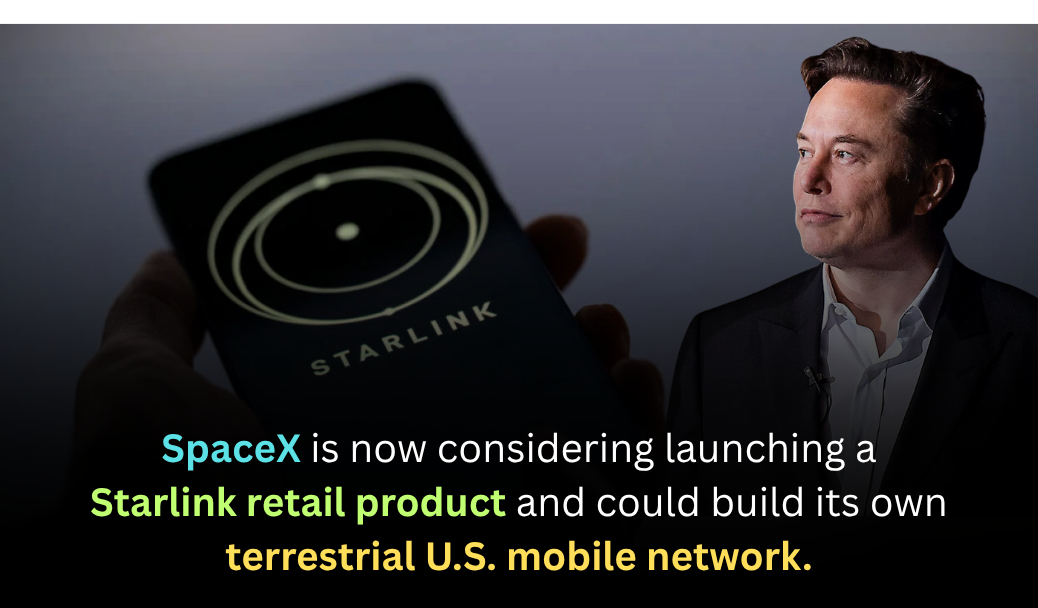
SpaceX told investors it plans to launch a Starlink mobile service for U.S. consumers.
That’s a direct shot at Big Telecom and would put SpaceX head-to-head with Verizon, AT&T, and T-Mobile in a $1.6T market.
For most investors, that sounds like a telecom shakeup.
For Mode Mobile, it could be much bigger.
Mode built a platform that rewards users for everyday smartphone activity like browsing, listening, using apps, and charging.
If Starlink brings internet access to places cell towers can’t reach, it could significantly expand Mode’s addressable market.
More connected phones.
More active users.
More ways for people to earn from the device already in their pocket.
Mode has already reached 490M+ users, helped users earn and save over $1B, and generated $115M+ in cumulative revenue.
But the bigger story is what happens next.
If global connectivity keeps expanding, that model could reach more people, in more markets, with fewer barriers than ever before.
That’s why 60,000+ shareholders are already watching Mode ahead of a potential IPO.
With their Nasdaq ticker secured and more than $90M invested, Mode’s pre-IPO shares are still available at $0.52 for a limited time.
Click here to see why investors are piling in before Mode’s pre-IPO window closes.
Hey there, bargain hunter.
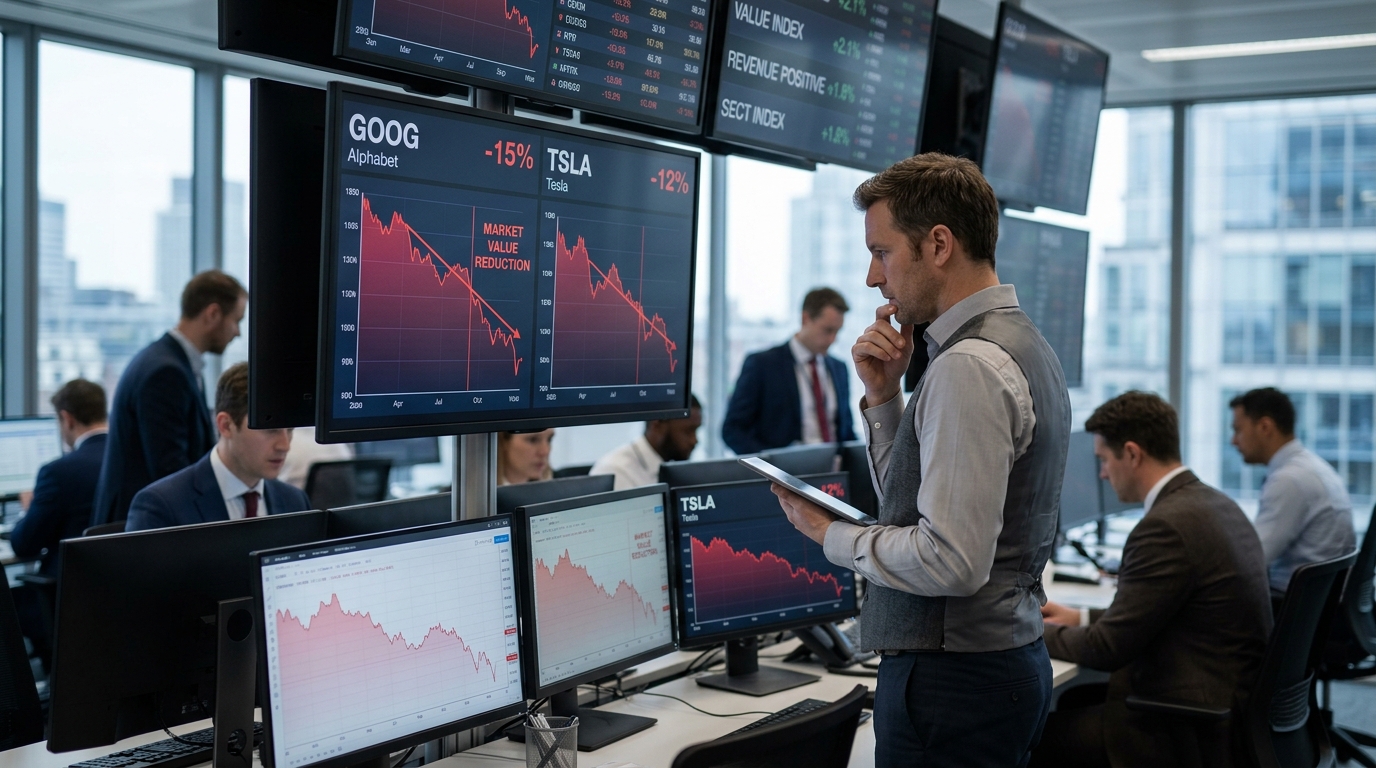
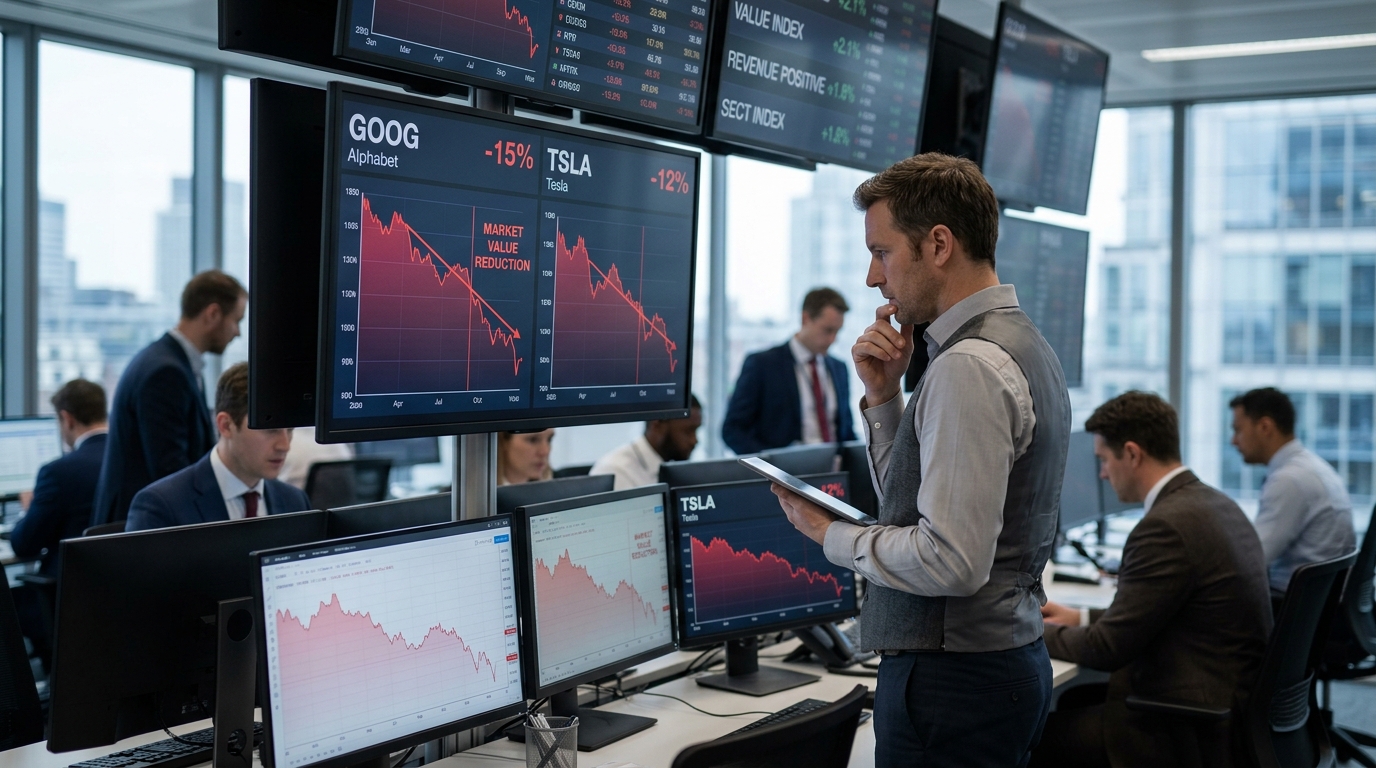
Here is a question worth sitting with: when two of the most recognizable companies on earth lose a combined half-trillion dollars in market value in a single week, is that a crisis or a clearance sale? The honest answer, as usual, depends on which problem you are actually looking at.
This past week handed us one of the more instructive case studies of the year. Alphabet and Tesla each reported earnings. Each delivered something investors did not want. Each got punished severely. And sitting quietly on the other side of that trade, the companies that supply the infrastructure those two giants are pouring money into watched their stocks surge. That divergence is the whole story, and it is worth unpacking carefully before anyone reaches for a buy button.
What Actually Happened
Alphabet reported Q2 2026 results on July 22. The top line was genuinely impressive: revenue grew 24% year over year to $119.8 billion, Google Cloud surged 82% to $24.8 billion, Search revenue climbed 17% to $63.3 billion, and operating income rose 30% to $40.8 billion. By almost every income-statement measure, this was one of the strongest quarters in the company’s history.
Then the cash flow statement arrived.
Capital expenditures doubled year over year to $44.9 billion, outrunning the $39.1 billion in operating cash flow the business generated. The result was negative free cash flow of $5.9 billion for the quarter — the first time Alphabet has reported negative free cash flow as a public company. The stock fell roughly 8%, shedding approximately $330 billion in market value. Management compounded the anxiety by raising full-year capex guidance to $195-$205 billion (up from $180-$190 billion) and signaling that 2027 spending will increase further.
“Wall Street Tried to Buy My Secret – But I’ll NEVER Sell”
When Wall Street suits got wind of Tim Bohen’s market-crushing algorithm, they were beating down his door for it. But his NEW trading algo is unlike anything that’s come before… and it’s only a matter of time before they come knocking again
Tesla arrived at the same place from a completely different direction. Q2 2026 deliveries hit a record 480,126 vehicles, up 25% year over year — well above analyst expectations of around 406,600. Revenue came in at $28.24 billion, up 26%, topping estimates by a wide margin. Impressive numbers on the surface. But operating income collapsed 57% to just $398 million, compressing the operating margin to 1.4% from 4.1% a year ago. Non-GAAP earnings per share landed at $0.33, versus the $0.53 analysts expected. Free cash flow turned negative by $1.09 billion as capital expenditures surged 142% to $5.79 billion. Tesla lost roughly $250 billion in market value and posted its worst weekly decline since 2022.
Two very different stories. The market handed both the same grade.
The Real Reason the Market Reacted This Way
Markets do not price what happened. They price what they expect to happen next. And what investors heard from both companies this week was not a one-quarter blip. It was a signal that the spending is accelerating, that returns are not yet visible, and that free cash flow — the oxygen supply of any business — is getting consumed by the investment program faster than the core operations can replenish it.
For Alphabet, this is essentially a bet that AI infrastructure spending will compound into dominant market position in cloud, search, and enterprise software. The Cloud backlog of $514 billion — up more than $50 billion sequentially — suggests demand exists. The issue is timing. Alphabet holds $242.5 billion in cash and marketable securities against $98.2 billion in long-term debt. The balance sheet is not in distress. But the company raised $49.6 billion through a stock issuance in June and issued $20.3 billion in senior unsecured notes, all to fund a buildout where the return timeline is measured in years, not quarters. That is what spooked investors, not the income statement.
For Tesla, the problem is more structural. The profitability squeeze is not purely a function of investment spending. The $7,500 federal EV tax credit expired on September 30, 2025, eliminating a subsidy that had meaningfully supported Tesla’s economics. Regulatory credit sales — which generated $11 billion for Tesla since 2019 — are also shrinking fast, because the underlying policy change that made rivals buy those credits has been repealed. Tesla’s automotive gross margin held at 16.8%, but that was still below analyst expectations of 19.4%. And operating expenses jumped 47% as the company poured money into AI, robotics, Optimus, and autonomous systems. CEO Elon Musk acknowledged there may be a few rough quarters ahead.
Volume without profit. That is the uncomfortable summary of Tesla’s quarter.
Who Actually Won This Week
Here is where it gets interesting. The exact spending that got Alphabet punished rewarded its suppliers handsomely.
Supermicro Computer disclosed new orders exceeding $60 billion in a single quarter and jumped sharply on the news. Gross margins came in between 15% and 17%, nearly double what the company had guided earlier. Digital Realty, a data center landlord, surged more than 14% after posting record Core FFO per share and a record $1.9 billion backlog — and raised its own spending plans without being penalized at all. The difference, as one analyst put it, is that Digital Realty’s build-out is already leased. Nvidia added roughly $100 billion in market cap on the week, rising about 2%, even as the broader Magnificent Seven cohort erased approximately $880 billion in value.
This is the AI trade in its current form. Money is moving toward the companies that receive the infrastructure dollars rather than the ones spending them. The picks-and-shovels dynamic is not a new idea, but watching it play out in real time at this scale is clarifying.
One Gold Trade. Less Than an Hour.
A recent gold trade unfolded in under an hour. No overnight holding. No drawn-out waiting. What made it interesting wasn’t just the outcome… But how clearly the setup formed ahead of time. It followed a pattern tied to a specific moment in gold. One that tends to repeat more often than most realize. This report walks through the gold setup, the timing, and what to watch for.
Is Either Stock Actually Cheap Now?
This is the Cheap Investor’s core question, and the answer differs materially between the two names.
Alphabet is the more interesting case. The business itself is arguably one of the highest-quality compounding machines ever constructed. Search revenue of $63.3 billion grew 17% despite widespread concern that AI would erode query volume. Cloud is growing at 82% with a $514 billion backlog. Operating margin held at 34%. The trailing 12-month free cash flow remains solidly positive at $53.3 billion — which means one quarter of outsized spending does not change the fundamental character of the business. The concern is whether capex escalating toward $200 billion annually, with 2027 expected to be even higher, represents rational investment or an arms-race overshoot. That question will take several quarters to answer.
What is clear is that Alphabet is not cheap by traditional metrics. After the selloff, shares were trading around $317-$329. Trailing 12-month free cash flow of $53.3 billion implies a price-to-free-cash-flow multiple in the mid-to-high twenties, and that figure will compress further as near-term capex weighs on cash generation. Consensus still expects 32% EPS growth and roughly 21% revenue growth for full-year 2026. If those numbers hold, the multiple is not outrageous for a business of this quality — but there is no obvious margin of safety for patient value investors at current prices. It is a high-quality business going through a real capital-intensity cycle, not a mispriced gem.
Tesla is a harder conversation. The operating margin at 1.4% — from a company carrying a valuation that implies years of robotaxi, AI, and autonomy success — is simply difficult to reconcile. The stock was trading around $374 before earnings and has now broken below key support. The bull case requires Cybercab robotaxi fleets to scale, Optimus to reach meaningful production, and Full Self-Driving subscriptions — currently at 1.48 million active users, up 56% — to become a dominant, high-margin revenue stream. Those are real options on real technologies. But they are options, not earnings. The core automotive business is earning next to nothing on record volume. Management has stopped providing delivery guidance, which most analysts read as a sign the growth story for the car business has stalled. That is a meaningful signal.
The Cheap Investor Scorecard
- Business Quality — Alphabet: High. Tesla: High potential, execution question mark.
- Financial Strength — Alphabet: $242.5B cash, strong. Tesla: $43.5B cash, negative FCF, spending escalating.
- Valuation — Alphabet: Not cheap, but quality not destroyed. Tesla: Difficult to justify at any operating margin near 1.4%.
- Competitive Position — Alphabet: Dominant in search and cloud. Tesla: Pressured by Chinese competition and margin war.
- Cash Flow — Alphabet: Negative for Q2 but $53.3B TTM. Tesla: Negative, capex up 142%.
- Management Execution — Alphabet: Executing on growth, debatable on capital discipline. Tesla: Musk’s distraction factor is real and acknowledged by Wall Street.
- Catalyst Strength — Alphabet: Cloud backlog of $514B. Tesla: Robotaxi and Optimus; timeline uncertain.
- Margin of Safety — Alphabet: Thin. Tesla: Essentially none at current multiples.
- Key Risk to Watch — Alphabet: capex without proportional return. Tesla: policy tailwinds gone, no guidance, margin deterioration.
- Long-Term Potential — Both real, both requiring patience measured in years, not quarters.
What the Supplier Side Is Telling You
Slight tangent here, but it matters. The fact that Digital Realty raised its own capex plans this week and was rewarded — while Alphabet raised its capex plans and was punished — tells you exactly what the market is currently paying for. Contracted, visible cash flows. The data center landlord has a $1.9 billion backlog of signed leases. Its capital spending is already spoken for. Alphabet’s is a bet on demand that has not yet converted to contracted revenue at the infrastructure level.
This distinction matters for anyone thinking about where value currently sits in the AI ecosystem. The picks-and-shovels argument — buy the suppliers, not the spenders — has worked this week. Whether it continues to work depends entirely on whether AI hyperscaler spending translates into the revenue and margin expansion that justifies it.
The Next $435B Energy Empire
John D. Rockefeller would be worth $435b today. But “oil money” is old news. Next up? A $2.1 trillion opportunity in “clean” coal. It’s a “Rockefeller” moment for Frontieras, the company reforming coal into hydrogen and other valuable commodities. Their NASDAQ ticker ‘FASF’ is reserved.
Final weeks to join 12K+ people as an early-stage shareholder.
Invest in Frontieras at $9.01/share by 8/6.
Disclosure: This is a paid advertisement for Frontieras’s Regulation A offering. Please read the offering circular at invest.frontieras.com
Bottom Line
If Alphabet’s Cloud backlog converts at the pace the company’s own numbers suggest, and if capex begins to stabilize in 2028, the stock at current levels will look reasonable in retrospect. The business quality is genuine. But it is not cheap today, and patience here requires genuine conviction that the AI infrastructure spending generates returns, not just revenue growth.
Tesla is a different situation. A 1.4% operating margin on record deliveries is not an investment phase story. It is a profitability problem layered on top of an investment phase. The regulatory credit tailwinds are gone. The EV tax credit is gone. Competition from China is not softening. If the robotaxi and Optimus timelines slip — and they have slipped before — there is very little underneath the stock at current valuations to provide a floor.
Watch Tesla’s Q3 operating margin in October. If it does not recover toward 3% or better, the investment thesis depends entirely on promises, not numbers.
For now, the bargain is not obvious in either ticker. The more interesting question — one worth spending time on — is whether the selloff in the broader Magnificent Seven cohort is creating real value elsewhere. Because while half a trillion left Google and Tesla this week, most of the rest of the S&P 500 barely noticed.
That, too, is a signal worth following.
The Cheap Investor