
July 23, 2026
60 Countries. New Tariffs. Now What?
The market is repricing risk. Patient investors may find opportunity in the noise.
First a note from Base Camp Trading
Hey Trader,
You’ve done the work.
Backtested. Journaled. Stared at charts until your eyes bled.
But every strategy eventually “gives it all back.”
It’s exhausting. And it feels like the only people making money are the ones selling courses.
I get it.
That’s why I want to send you my Opening Bell Breakouts Trade Guide.
For free.
It details the simple strategy I use to get in and out of the market before 10 AM.
No more grinding all day. No more getting chopped up by the afternoon algorithms.
This is about trading less, but smarter.
>> Download the FREE guide and escape the grind
Inside, you’ll see why weekly options are perfect for this strategy, and how to use them to trade stocks like GOOGL, META, and TSLA with as little as $75.
Stop the burnout.
Click here for your free guide.
Thomas Wood
Pro Trader, Base Camp Trading
60 Countries. New Tariffs. Now What?
Hey there, bargain hunter.
Let me ask you something. When everyone else is running for the exits, are you looking at what they’re leaving behind?
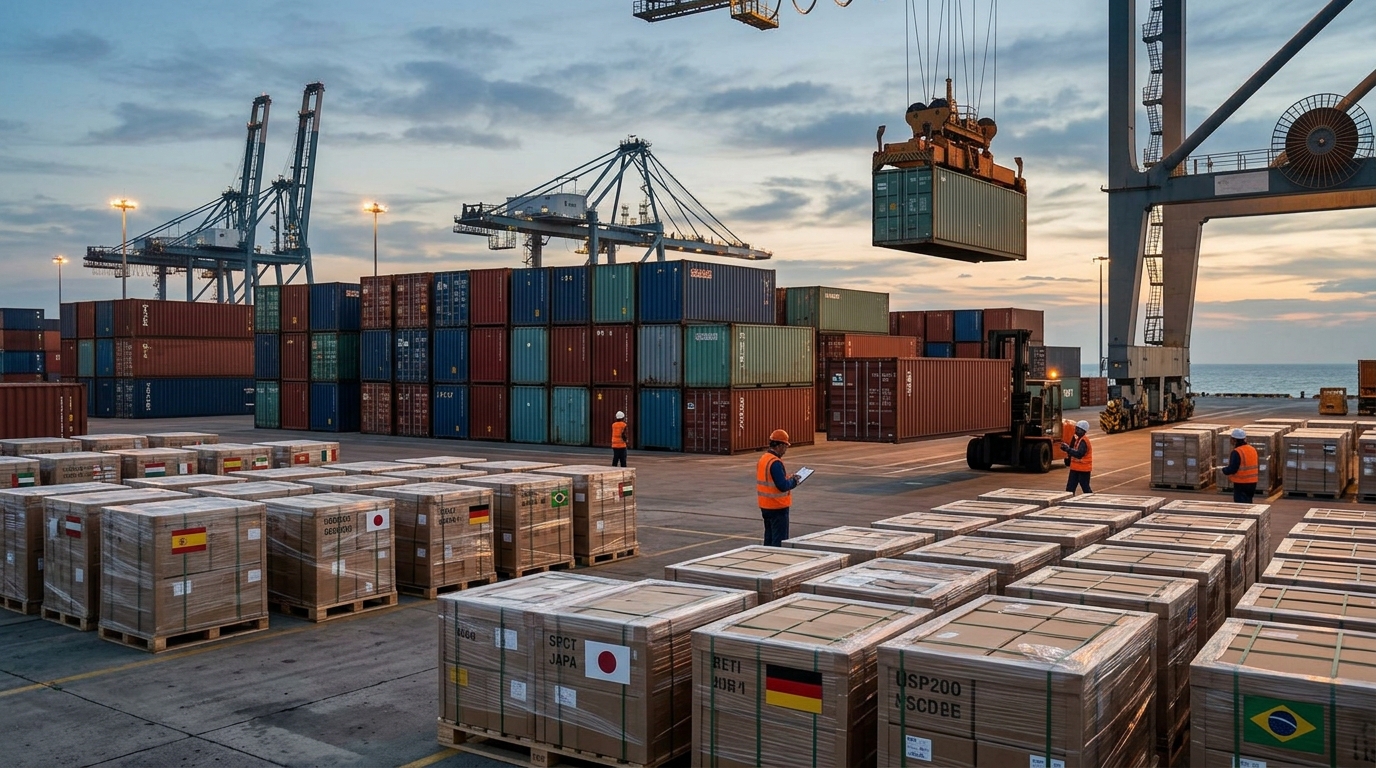
Because last night, as the clock ticked toward midnight, the Trump administration dropped a new wave of tariffs on 60 of America’s trading partners. Not a tweak. Not an extension. A full replacement of the expiring 10% blanket duty with a fresh set of levies under a more legally durable authority. The market didn’t take it well.
What Actually Happened
Here are the facts on the ground, as of this morning.
- The U.S. Trade Representative announced tariffs of 10% to 12.5% on imports from 60 countries, covering 99.4% of all U.S. imports by value.
- The new levies replaced a temporary 10% global tariff that expired at midnight July 24 under Section 122 of the Trade Act of 1974.
- The incoming tariffs are structured under Section 301 of the Trade Act of 1974, the same statute Trump used to impose China tariffs in his first term. Those survived court challenges. That matters.
- Countries at 10% include Canada, Mexico, India, the U.K., Argentina, Bangladesh, Indonesia, and others. The EU, Taiwan, Japan, South Korea, and Switzerland face 10% to 12.5%, depending on product.
- A separate investigation into 16 countries accounting for 70% of U.S. imports is still underway, probing whether overproduction has put U.S. companies at a disadvantage. More tariffs could follow.
The justification this time is forced labor. The administration says these countries have failed to enforce bans on goods made through coerced workers. Critics call it the same trade policy in a different legal jacket. Both things can be true.
What’s interesting is the legal framing. Section 301 has a track record of surviving courts. That’s a meaningful change from the IEEPA authority the Supreme Court struck down in February. This round may actually stick.
The Market’s Reaction
Wall Street didn’t wait for a press release to form an opinion.
The S&P 500 fell 1.2% on Thursday, its worst single-day loss in a month. The Nasdaq 100 dropped 1.9%. A gauge of megacap stocks had its worst session since the tariff-driven rout of April 2025. Asia-Pacific futures pointed lower heading into Friday morning.
Some of that selling was tariff fear. Some of it was Alphabet sinking 7.5% after doubling its capital expenditure forecast to $205 billion for AI infrastructure, reigniting concern about unsustainable spending. Tesla fell 14% after weaker profits. Microsoft, Meta, Amazon, and Oracle dropped between 3% and 5%.
Point is: the selling was layered. Tariffs lit the fuse. Earnings reports on mega-caps added fuel. The two stories got tangled together in Thursday’s session, which means the market may have oversold some names that had very little to do with either.
That’s where we come in.
The Real Question: Who Bears the Cost?
Tariff risk in 2026 is real, but it is not uniform. That sentence is worth reading twice.
The businesses most exposed to import costs are the ones assembling products overseas and shipping them into the U.S. The businesses least exposed are the ones that make things here.
So let’s separate the two groups clearly.
The Pressure Side
Three areas of the market sit directly in the line of fire: apparel, consumer electronics, and auto importers.
Nike (NKE) is the clearest example of how messy this gets at the company level. Nike still sources a large share of footwear from Vietnam, Indonesia, and China. Higher duties translate directly into higher landed costs. The brand does have pricing power, but premium sneaker buyers also have alternatives. Through fiscal Q3 2026, Nike’s gross margin contracted 130 basis points to 40.2% due to higher tariffs in North America. Full-year revenue for fiscal 2026 came in at $46.4 billion, flat year over year, with net income down 3% to $3.1 billion.
The Q4 number looked better on the surface, but strip it down: diluted EPS was $0.72, which included a $0.52 per-share benefit from an anticipated nearly $1 billion IEEPA tariff refund. Without that one-time item, underlying earnings per share came to $0.20. That is a company still grinding through structural pressure, not one that has solved the problem. Nike’s stock is down more than 35% in 2026. The market knows the situation. The question for value investors is whether the core brand is worth more than the current price implies.
Apple (AAPL) assembles most iPhones in China, with a growing but still smaller share in India and Vietnam. Apple has the balance sheet to absorb temporary cost pressure. The longer question is how quickly it can shift more production out of China. That shift takes years and capital. In the meantime, margin pressure is real.
On the auto side, Ford estimated its 2025 net loss from trade policy at $2 billion, while GM warned that 2026 tariff costs could reach $4 billion due to full-year implementation of global surcharges. Both companies run large assembly footprints in Mexico alongside U.S. plants. Reshuffling that production is a multi-year, capital-intensive undertaking.
Don’t sell your shares to him on Friday afternoon…
Every Friday afternoon like clockwork, a legendary trader scoops up shares knowing after-hours breaking news will have traders desperate on Monday morning to buy back from him for 5X… 10X… or even 100X what they sold for.
All the while he gets to collect as much as $9,518 OR MORE just for holding shares over the weekend.
The Opportunity Side
Here is the part people skip when tariff headlines hit.
Every dollar of cost added to an imported product is a dollar of competitive advantage handed to the domestic producer. That is not speculation. That is how protection economics works.
Domestic manufacturing, defense, and U.S.-based capital goods companies sit in a structurally better position in a tariff-heavy environment. Let’s look at the names worth watching.
- Nucor (NUE): The largest U.S. steel producer operates a network of electric arc furnace mills that melt scrap into structural steel. Its flexible production model allows it to scale volume up or down quickly. Section 232 steel tariffs have made imported steel meaningfully more expensive, pulling demand toward domestic producers. Nucor stock gained roughly 38% in 2026 on that tailwind. The harder question now is how much of the good news is already reflected in the price, and whether today’s new Section 301 levies extend that runway or simply maintain it. The risk, stated plainly: tariff policy is not permanent, and steel prices are notoriously hard to forecast.
- Steel Dynamics (STLD): Another domestic electric arc furnace producer that has reported higher shipments and average selling prices on tariff-protected goods including sheet and plate steel. Runs a similar playbook to Nucor with a slightly different product mix.
- Caterpillar (CAT): A more nuanced situation. CAT has a large U.S. manufacturing footprint and exposure to infrastructure and equipment demand, which benefits from onshoring trends. But as a global buyer of steel and aluminum, it also faces input cost pressure. CAT adapted by raising prices, reshoring some components, and preserving margins. It is one of the clearest ways to get exposure to the intersection of tariff relief and AI data center buildout, since industrial construction for data centers is accelerating.
- Deere and Co. (DE): Agricultural equipment manufacturer with significant U.S. operations. When imported machinery faces higher costs, domestic equipment producers can see improved order flow. Deere’s balance sheet and dividend history make it a name worth watching during broad market selloffs.
- Lockheed Martin (LMT): Defense primes are insulated by design. Their primary customer is the U.S. government. They don’t compete for shelf space overseas. They don’t import finished goods. In a world where tariff policy is creating cost uncertainty across most global supply chains, defense is one of the cleaner places to find revenue certainty.
Cheap Investor Scorecard: How to Evaluate Tariff-Era Opportunities
Before you chase any name on a tariff headline, run through this checklist. It keeps emotion out of the process.
- Where does the company actually manufacture its products? Domestic production is the starting advantage.
- What percentage of input costs come from imported materials? High import dependency is a liability under new tariff structures.
- Does the company have pricing power to pass costs through? Brand strength and switching costs determine how much pain gets absorbed by customers versus shareholders.
- What does the balance sheet look like? Companies with clean balance sheets can absorb temporary headwinds that would break a leveraged competitor.
- Is the stock decline tied to the tariff issue specifically, or to a broader selloff? Sometimes the best situation is a good company sold off alongside bad ones for the wrong reasons.
- Is the problem temporary or structural? A tariff creates a cost headwind. A secular demand decline is a different and more serious problem.
- What is the valuation relative to history? A business worth watching at $60 is a better idea at $42 than it was at $58, assuming the fundamentals have not changed.
- Is management being transparent about tariff exposure? Vague language around cost headwinds is a yellow flag. Specific dollar estimates and mitigation plans are more encouraging.
- Are insiders buying? In environments like this, management buying their own shares with personal capital is a signal worth noting.
- What would need to go right for the thesis to work? Be honest about the required conditions. If the answer is a complete reversal of trade policy, the margin of safety may be thin.
A Brief Tangent Worth Considering
Something that doesn’t get enough attention in tariff coverage: the downstream effects on inflation expectations and Fed policy. The new tariffs cover 99.4% of U.S. imports by value. That is nearly the entire import basket. If those levies hold and importers pass costs through to consumers, the inflation picture in the second half of 2026 gets more complicated. A more complicated inflation picture means the Fed has less room to cut rates. Less rate-cutting headroom tends to compress valuations on long-duration assets.
That’s not a reason to panic. It is a reason to be thoughtful about which businesses you own and how much of their valuation depends on an optimistic rate path.
The Bottom Line
The tariff wave that hit overnight is more legally durable than anything that came before it. Section 301 has survived court challenges. That distinction matters to anyone modeling future cash flows.
The market sold off broadly. That creates noise, and noise creates gaps between price and value.
If you own heavy importers, the question is not whether they are feeling pressure. They are. The question is whether that pressure is already reflected in the current price, and whether the underlying business is strong enough to work through it. Nike’s brand is not broken. Apple’s installed base is not gone. But neither company has a quick fix for its import exposure, and patience has a real cost.
If you’re looking for businesses that actually benefit from this environment, start with domestic producers in steel, industrial equipment, and defense. Not every name in that group is cheap right now. Some are priced for the good news already. Do the work before you commit capital.
The market isn’t always right about what’s permanently broken versus temporarily uncomfortable. That gap is where this publication lives.
More to come as this develops.
The Cheap Investor