
July 14, 2026
Meta Is Building Its Own Chips. Q2 Earnings Land July 29.
A message from Mode Mobile
Wall Street just sent investors a loud message.
The Dow hit a fresh record, but the Nasdaq 100 slipped as semiconductor stocks got hammered and the AI trade split in two.
The surprise winner? Software.
Major software ETFs surged and Meta jumped nearly 10% after announcing plans to sell excess AI compute capacity.
The message is clear: AI is no longer just about chips.
It is about software, data, and platforms that can turn everyday digital behavior into value.
That is exactly where Mode Mobile is building.
Mode’s EarnOS rewards users for everyday smartphone activity like browsing, listening, charging, and using apps. In the process, it creates a direct relationship with users and first-party data that could be monetized for AI model training.
The scale is already real:
- 490M+ users
- $115M+ cumulative revenue
- $1B+ earned and saved by users
- 32,481% 3-year revenue growth
- $MODE Nasdaq ticker secured
Deloitte named Mode the #1 fastest-growing software company in North America, and investors can still access shares before a potential IPO at $0.52/share, plus up to 20% bonus shares.
Click here to review Mode Mobile’s $0.52 pre-IPO opportunity now.
FEATURED CONTENT
Meta Is Building Its Own Chips. Q2 Earnings Land July 29.
Something shifted in the Meta story over the past two weeks, and it happened in two distinct moves that a lot of people are still conflating.
First: on July 1, Bloomberg reported that Meta is building an internal cloud infrastructure business called Meta Compute, designed to sell excess AI computing capacity and model access to outside customers. The stock jumped more than 9% that session. CoreWeave and Nebius fell double digits on the same news.
Then, on July 9, Reuters published details from an internal memo: Meta plans to start manufacturing an AI chip called “Iris” from September, as part of a plan to boost overall computing power to 14 gigawatts by 2027. The stock climbed another roughly 6% that day.
By July 10, META had closed at $669.21, up about 15% over five days. That’s the scoreboard. Here’s why it actually matters.
The Spending Problem Gets a Response
Meta raised its 2026 capital expenditure forecast to a range of $125 billion to $145 billion, up from a prior range of $115 billion to $135 billion. That number has been the single biggest overhang on the stock all year. Every time it moves higher, investors get nervous.
The Closest Thing to a Virtual AI Monopoly Wall Street Is Ignoring
A little-known company is building what may be the closest thing to a virtual monopoly the AI era has ever seen.
Yet it beat Apple, Amazon, and the S&P 500 combined… While paying out $146,000 in total dividends on a 1,000-share stake.
Kevin O’Leary calls what it controls a “unicorn.” Right now, it’s trading at a rare discount.
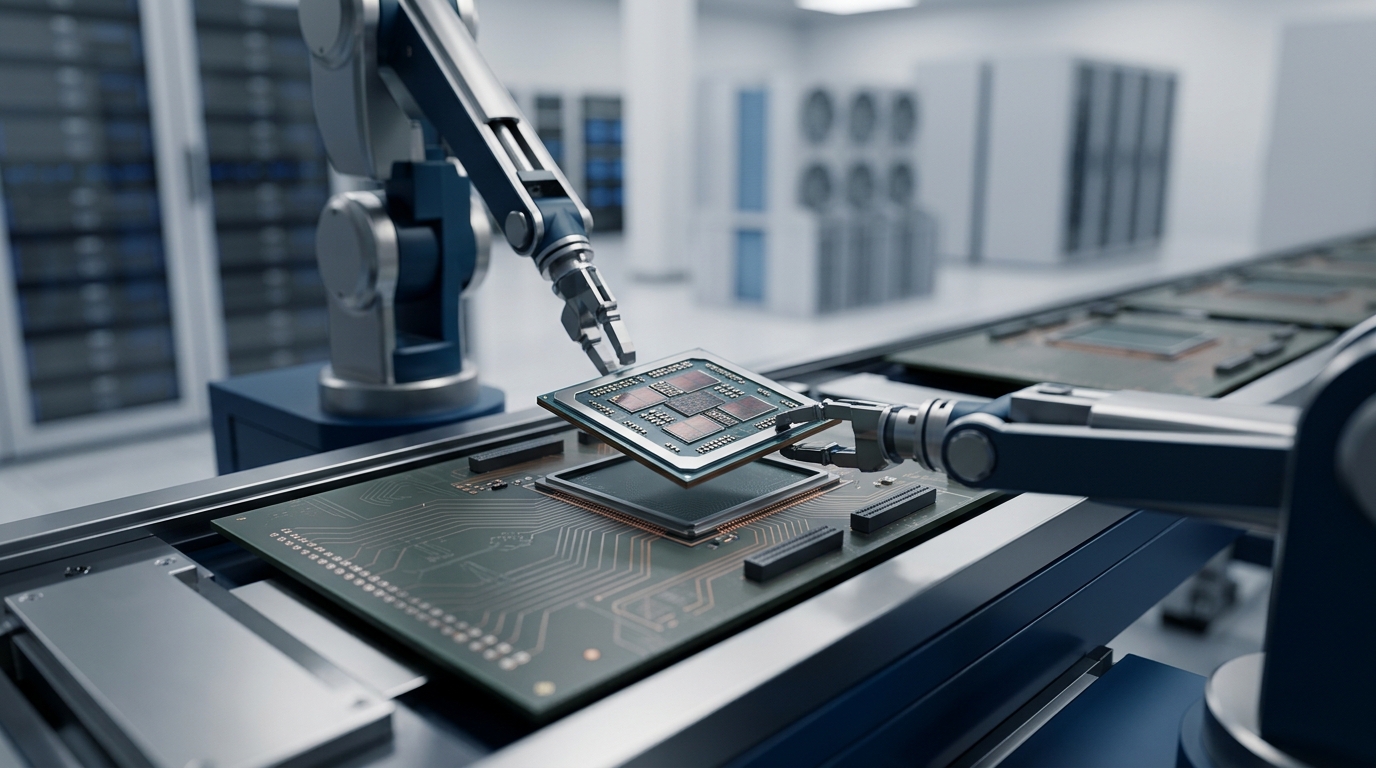
The Iris chip is Meta’s clearest answer to that concern so far. The chips are expected to help the company save on buying GPUs from chipmakers like Nvidia and AMD, though it still expects to spend significantly with those providers. Meta is working with Broadcom to help design the chip and Taiwan Semiconductor Manufacturing to manufacture it. Testing moved fast: the chip cleared six weeks of testing without a major issue, which is notably quick progress for an in-house effort that had a rough start since its launch more than half a decade ago.
Worth noting: Meta plans to launch a new chip roughly every six months through 2027, a much faster cadence than the industry norm of about one new chip per year. That’s not a chip program. That’s a chip assembly line.
The Bigger Idea: Meta Compute
The chip is one piece. The cloud business is the other.
Meta Compute is an internal organization formed to oversee the buildout of Meta’s AI infrastructure, with plans to sell that capacity externally. The business would put Meta in direct competition with AWS, Azure, and Google Cloud. Options reportedly include letting outside developers pay to run queries against Meta’s own AI models, and selling bare metal computing capacity to neocloud companies.
This is the part of the story Wall Street is still trying to price. The potential is real. The timeline is not. Meta hasn’t confirmed a commercial launch date, a pricing structure, or a revenue contribution. What Zuckerberg says about this on July 29 will matter more than any of the pre-earnings speculation.
What the Numbers Say Right Now
Q1 2026 was a genuinely strong quarter. Revenue hit $56.31 billion, up 33.1% year over year, beating the $55.52 billion consensus. Ad impressions grew 19% and the average price per ad rose 12%.
- GAAP EPS: $10.44, which included a one-time $8.03 billion income tax benefit. Excluding that item, underlying EPS was $7.31, still a genuine beat versus the $6.66 consensus.
- Operating margin: 41%, with operating income of $22.9 billion, despite total costs rising 35% year over year.
- Q2 2026 revenue guidance: $58 billion to $61 billion. Analyst consensus sits around $60 billion.
- Consensus Q2 EPS estimate: approximately $7.18 to $7.32, depending on the source.
- Free cash flow in Q1: $12.4 billion. Cash and marketable securities on hand: $81.2 billion.
- Forward PE at current prices near $669: approximately 20x, based on 2026 earnings estimates. That is below META’s own 3-year average PE of roughly 25x to 27x.
That last point is worth sitting with. For a company growing revenue 33% and running 41% operating margins, trading at a discount to its own historical average is not the typical outcome. The capex overhang is doing real work here.
“My system said ‘SELL’ right before this stock tanked. Today, I’m shouting ‘BUY NOW’ before it soars.”
In 2023, Marc Chaikin’s system flashed bearish on an automotive company no one had yet heard of. The stock crashed 35%. Today, his system rates this company “Very Bullish” and Marc calls it a screaming buy thanks to a new “groundbreaking partnership” with Nvidia that hands this company the keys to the self-driving kingdom on a silver platter.
What Could Go Right. What Could Go Wrong.
Bull case: Meta Compute generates meaningful external revenue, Iris chips reduce GPU dependency faster than expected, and the digital ad business keeps running at 33%-plus growth with 41% margins. If even a fraction of the cloud business converts at AWS-level margins, the valuation math changes significantly. Analysts tracking the situation note that META could see a meaningful earnings boost for each gigawatt of AI capacity it successfully monetizes.
Bear case: A further guide-up on capital expenditure without a matching earnings inflection would likely punish the stock again, the same way it did after Q1 when shares fell 6-7% after hours despite beating on both revenue and EPS. Free cash flow is already under pressure, with some analysts projecting it could turn negative as capex surges. Regulatory headwinds across the EU add a separate layer of friction.
The answer arrives July 29. Between the Iris chip production timeline, the Meta Compute commercial path, and Q2 revenue against a $58 to $61 billion guide, that earnings call could be one of the most consequential Meta has had in years. The Fed decision lands the same day, which adds a macro variable to whatever the after-hours reaction looks like.
Whether the stock is genuinely cheap here or just looks cheap on a relative basis comes down almost entirely to what Zuckerberg says about where all that capex is actually going.