
May 27, 2026
June 12: 4,566X Bigger Than Amazon IPO?
Featured: Unwinding the War Premium
Below is an important message from one of our highly valued sponsors. Please read it carefully as they have some special information to share with you.
Dear Reader,
Elon Musk has just confirmed the SpaceX IPO for Friday, June 12, 2026, at a valuation of up to $2 trillion.
For perspective, that means the SpaceX IPO could be as much as a mind-blowing 4,566X bigger than Amazon’s IPO.
Needless to say, there’s an extraordinary amount of money up for grabs as the company goes public.
Best of all, you can follow this strategy right inside your regular brokerage account and with as little as $100 and just a few minutes of time.
It’s drop-dead simple once you know how it works.
But you must hurry…
If you wait until after the IPO takes place on June 12, your chance to get a pre-IPO stake will be gone forever.
Click here now for everything you need to know.
Regards,
Matt Insley
Publisher, Paradigm Press
Unwinding the War Premium
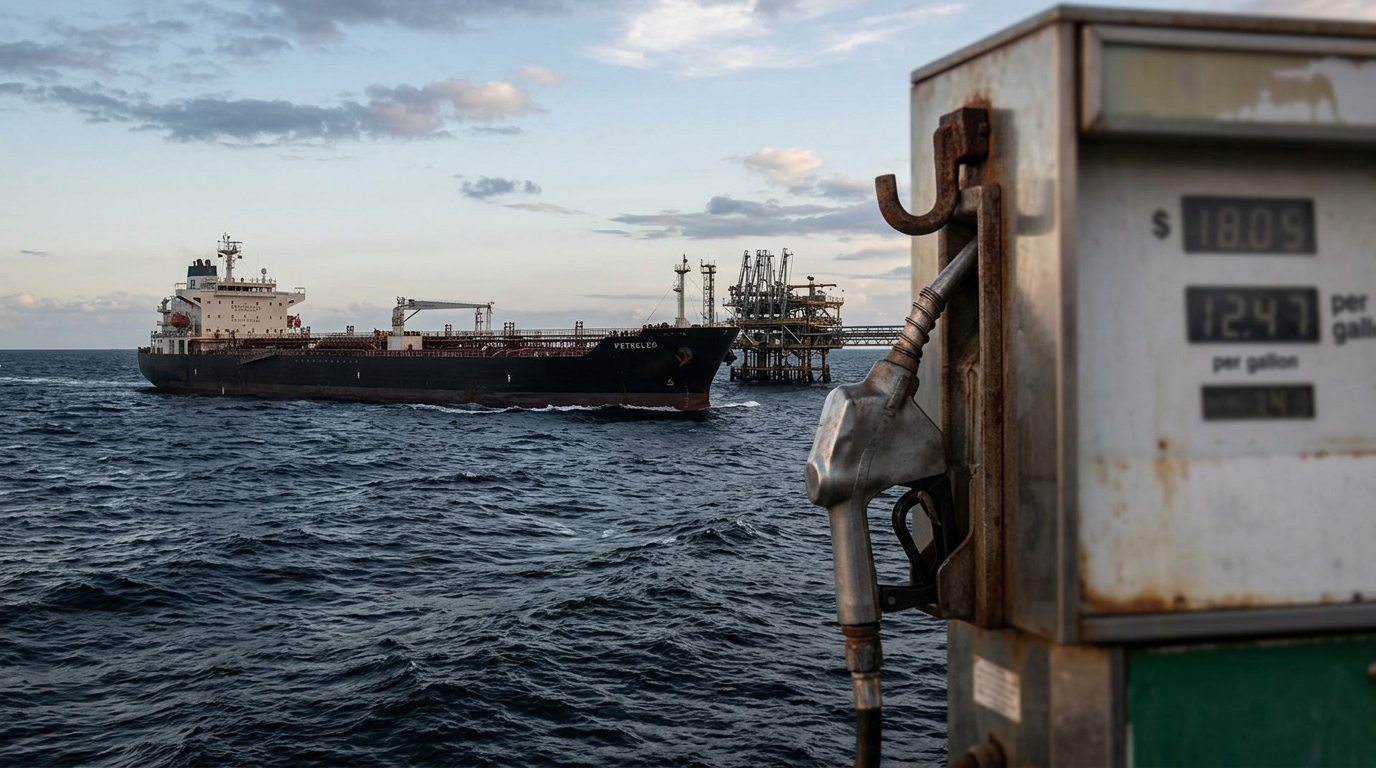
WTI crude closed down 4.4% to $89.70. Brent fell 3.6% to $95.98. That’s not noise – that’s a regime shift in how the market is pricing geopolitical risk, and it happened in a single afternoon.
The catalyst is the U.S.-Iran peace draft framework. The third round of high-level negotiations took place on April 26, and high-level talks were described as “serious and productive,” with both sides aiming for an agreement based on mutual respect. More recently, Trump said both sides were close to finalizing an agreement involving strong inspections. That language – coming from both sides of the table – is what sent crude off a cliff today.
Who wins when oil drops
The clearest beneficiaries are the carriers. Jet fuel is not a rounding error – it typically accounts for 20–25% of operating expenses for the airline industry. Crude had surged roughly 40% since the start of the U.S.-Iran war, compressing margins across the sector – and even a sustained 5–10% pullback in oil can materially improve forward earnings estimates for the major carriers.
U.S. airline stocks are trading higher as the crude pullback offers welcome relief to carriers squeezed by soaring fuel costs. Delta Air Lines (DAL), United Airlines (UAL), American Airlines (AAL), and Southwest Airlines (LUV) are among the top gainers, surging 2–7%. Slight tangent, but worth noting: the most powerful historical setup for airline stocks is when oil is elevated but has started to decline – in those instances, airline stocks returned an average of nearly 31% over the following 12 months, with positive outcomes roughly 84% of the time.
That’s a setup, not a guarantee. But it’s one worth knowing.
Beyond airlines, equities in technology and consumer discretionary are rallying on expectations of lower energy costs, easing inflation, and supply chain normalization. Think Amazon (AMZN) on the logistics cost side. Think Target (TGT) and Dollar General (DG) on the consumer spending reactivation thesis – cheaper gas is a stealth wage increase for lower-income households, and that’s their core customer.
The risk you can’t ignore
Here’s where it gets interesting. Brent jumped roughly 4% in a single session last week after U.S. military strikes in Iran set back hopes for a Hormuz reopening – a reminder that this trade reverses fast. Iran’s chief negotiator stated he was unsure whether a deal was imminent, while a senior Khamenei advisor dismissed Trump’s desired control over the Iranian nuclear program as a “fantasy.” The peace premium is real. So is the re-escalation risk.
Position accordingly. DAL and UAL are the cleaner plays – better balance sheets, more international route exposure that benefits from Hormuz normalization. AAL carries more debt and less margin for error if oil reverses. LUV is the domestic pure-play; lower fuel sensitivity than the others, but also less upside leverage to a full peace scenario.
The war premium took months to build. It can unwind in days. That gap is where the trade lives.