
May 22, 2026
The SpaceX IPO is right around the corner…
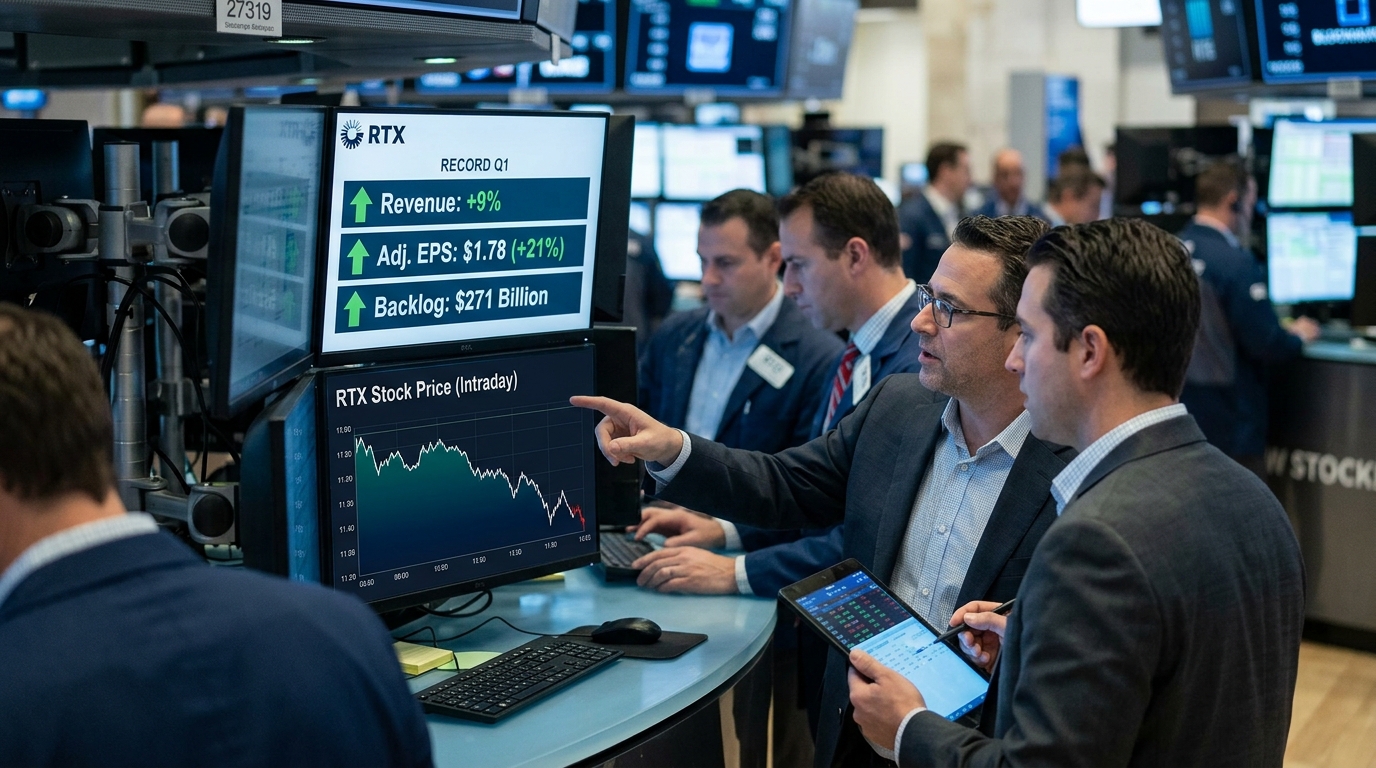
Featured: RTX – Record Quarter
Dear Reader,
The SpaceX IPO is right around the corner…
CNBC says it could be “the biggest IPO ever.”
Business Insider says Elon is preparing for a “monster IPO…”
And Bloomberg predicts the IPO will be worth $1.75 trillion…
If you follow the steps outlined here…
This could be your LAST CHANCE to profit from this historic IPO.
In fact, this may be your last chance to profit thanks to Elon Musk.
Think about it…
He accomplished his goal of creating reusable rockets…
He’s blanketed the planet with high speed internet…
He created mass market electric vehicles…
Where does the world’s richest man go from here?
His ultimate goal is to get to Mars…
But that could be decades away.
Meaning this SpaceX IPO could be your last chance to profit thanks to Elon in your lifetime.
And you may only have until June 9th to get in position.
Tim Sykes
CEO, Millionaire Media LLC
FEATURED
RTX: Record Quarter
Quick Summary
- Q1 2026 revenue: $22.1B, up 9% YoY (10% organic) — beat consensus of ~$21.5B
- Adjusted EPS: $1.78, up 21% YoY — beat the $1.51 estimate by ~18%
- Record backlog: $271B (up 25% YoY), split $162B commercial / $109B defense
- Book-to-bill ratio: 1.14 — demand is outpacing deliveries
- Free cash flow: $1.3B in Q1, up $500M from Q1 2025
- Full-year guidance raised: adjusted EPS $6.70–$6.90, sales $92.5–$93.5B
- Stock fell ~7.6% pre-market on earnings day; shares now trade near $174–176, roughly $40 off the 52-week high of $214.50
- Tariff headwind: ~$850M estimated full-year operating profit impact, with ~$500M in IEEPA tariffs already paid
- Is it cheap? Debatable — TTM P/E ~33x, forward P/E ~25–26x on guided EPS; 23 analysts rate it Buy with an average price target of $215
Let’s start with the part that makes no sense on the surface.
RTX Corporation (NYSE: RTX) reports Q1 2026 results: revenue of $22.1 billion, up 9% year-over-year and 10% organically. Adjusted EPS of $1.78 — up 21% — beating estimates by roughly 18%. A record company backlog of $271 billion, up 25% year-over-year. A book-to-bill ratio of 1.14, meaning demand is still coming in faster than product is going out. Raised full-year guidance. And the stock fell 7.6% in pre-market trading, closing the day sharply lower and continuing a slide that has pushed shares from a 52-week high of $214.50 down to roughly $174–176 as of this writing.
The market, in moments like these, is telling you something — but not necessarily what you think.
The Rare Earth Stock Boom: Even Bigger Gains Could Hit Soon
Tiny rare-earth miners are exploding: 200%, 300%, even 500% gains in just months. But while everyone piles into the same names, I’ve uncovered the next wave of this $3 trillion resource story…a breakthrough that could make today’s miners obsolete. I’m expecting the big announcement any day now.
What RTX Actually Is
Most investors know RTX as a defense name. And it is — but that framing undersells the story. RTX operates across three segments: Raytheon (missiles, radar, munitions), Pratt & Whitney (commercial and military aircraft engines), and Collins Aerospace (avionics, flight controls, and systems).
The commercial exposure is what makes RTX structurally different from a pure-play defense contractor. Pratt & Whitney supports more than 90,000 in-service engines globally — both military and commercial — through its worldwide maintenance network. Collins Aerospace, meanwhile, is often the only FAA-certified source for its components, which creates a durable, recurring cash flow stream that most defense-focused analysts tend to underweight.
Slight tangent, but worth noting: the GTF program just hit 10 years in service, logging over 50 million flight hours, with a backlog of roughly 8,000 engines still to be delivered. That’s a decade of operational data — and a long revenue runway baked in.
The Backlog Is the Real Story
A $271 billion backlog — $162 billion commercial, $109 billion defense — represents demand visibility that most industrial companies can only dream about. Raytheon posted 9% organic sales growth in Q1 to $6.9 billion, with munitions output up over 40% year-over-year. The company signed five framework agreements with the Department of Defense covering Tomahawk, AMRAAM, and the Standard Missile family. These aren’t one-off orders. They’re multi-year demand commitments.
The geopolitical backdrop amplifies all of this. The FY2026 defense budget totals roughly $1 trillion — combining $838.7 billion in discretionary appropriations and approximately $150 billion in reconciliation funding. The administration has now proposed a $1.5 trillion defense budget for FY2027, a roughly 44–50% increase over the current year’s level. RTX sits directly in the path of that capital allocation shift.
Pratt & Whitney also received a $6.6 billion F135 production contract covering lots 18 and 19 for the F-35. Collins and Pratt together secured an AirAsia X order for 150 Airbus A220 aircraft powered by GTF engines, with deliveries beginning in 2028. The contract wins keep stacking.
Why the Stock Fell Anyway
The post-earnings drop came as investors weighed a real cost overhang against an otherwise clean quarter. RTX disclosed that it absorbed approximately $500 million in IEEPA tariff costs since those tariffs took effect, with a full-year tariff impact estimated at roughly $850 million. That headwind was excluded from guidance — which means management raised guidance knowing the tariff drag exists, and the net result is still improved. Worth keeping that in context.
Tariff exposure hit Collins margins hardest — a 130 basis point headwind in Q1 — with a 50 basis point drag at Pratt. The GTF engine program also carries negative OE margins on new deliveries; that’s a near-term drag even as aftermarket revenue grows at a 14% clip. Supply chain constraints in rocket motors and microelectronics remain real production bottlenecks. None of this is trivial.
But here’s the thing: RTX grew organic sales and segment profit double digits while only increasing headcount 1%. That’s operating leverage. Raytheon alone delivered $32 million in year-over-year productivity improvement in a single quarter. And management is committing capital — a $285 million expansion of Pratt & Whitney’s turbine airfoil plant in Asheville, North Carolina, and a $200 million investment in Columbus, Georgia — which means the company is investing toward backlog conversion, not resting on it.
Full-year guidance was raised to adjusted EPS of $6.70–$6.90 and adjusted sales of $92.5–$93.5 billion. Free cash flow guidance of $8.25–$8.75 billion was reaffirmed.
Is It Cheap?
Honest answer: it depends on what you’re measuring — and what you believe about tariff resolution and margin recovery.
At roughly $174–176, RTX trades at a TTM P/E of around 33x and a forward P/E of approximately 25–26x on the midpoint of its guided adjusted EPS range of $6.70–$6.90. The TTM multiple is about 29% above RTX’s own 10-year median P/E of 25.9x — so on that basis alone, it isn’t cheap by historical standards. The aerospace and defense sector median is closer to 41x, which does make RTX look relatively modest by peer comparison.
The analyst community is more constructive. Of 23 analysts covering the stock, the consensus is Buy with an average 12-month price target of approximately $215 — implying roughly 22% upside from current levels. TD Cowen carries a $225 target, RBC Capital a $230 target, and Bank of America a $230 target. The stock is sitting nearly $40 below its 52-week high of $214.50, and roughly $50 below where most of the Street thinks it should be priced.
On a free cash flow basis, RTX guides to $8.25–$8.75 billion for the full year. At a $235 billion market cap, that’s an FCF yield of roughly 3.6%–3.7% — modest but improving, and better than most defense peers on a growth-adjusted basis.
What the stock needs is a macro catalyst — some combination of tariff clarity and a stabilization in geopolitical sentiment — to close the gap between business execution and share price. The business is doing its part. The multiple compression since March has been driven almost entirely by external factors, not operational deterioration. Whether that gap closes fast or slow is genuinely uncertain.
Trump’s Secret Plan to Unlock $7.5 Trillion for Patriots?
With this audacious move, President Trump could seal his historic legacy.
Minting a whole new generation of American millionaires in the process.
And nobody is paying attention.
But in this jaw-dropping new video, one ex-Wall Street insider exposes the smoking gun evidence that a Trump-approved $7.5 trillion tsunami is about to hit the markets.
Including a personal letter, written by President Trump himself, revealing why phase one of this secret plan could be just days away.
Click here for full details on the secret plan to unlock $7.5 trillion for American investors NOW.
The Numbers That Matter
- Q1 revenue: $22.1B (+9% YoY, +10% organic)
- Adjusted EPS: $1.78 (+21% YoY; ~18% beat vs. consensus)
- GAAP EPS: $1.51 (includes $0.27 of acquisition accounting adjustments)
- Segment operating profit: $2.9B (+14% YoY)
- EBIT margin: 13.7% (up from 13.1% in Q1 2025)
- Free cash flow: $1.3B (up $500M YoY)
- Backlog: $271B (+25% YoY) — $162B commercial, $109B defense
- Book-to-bill: 1.14
- Collins sales: $7.6B (+10% organic)
- Pratt & Whitney sales: $8.2B (+10% organic); commercial aftermarket +14%
- Raytheon sales: $6.9B (+9% organic); munitions deliveries +40% YoY
- Debt reduction: $500M paid down in the quarter
- Quarterly dividend: $0.73/share (up 7.4%), ex-dividend May 22, 2026
- Full-year adjusted EPS guidance: $6.70–$6.90
- Full-year adjusted sales guidance: $92.5–$93.5B
- Full-year free cash flow guidance: $8.25–$8.75B
Bull / Base / Bear
Bull: Tariff headwinds fade or get resolved — IEEPA tariffs have already been ruled unauthorized by a federal court, with ~$500M in potential refunds in play. Defense spending accelerates. Backlog converts at scale. GTF aftermarket ramps and drives margin expansion at Pratt. FCF approaches the high end of guidance. The stock closes toward analyst consensus targets in the $215–$230 range.
Base: Tariff drag persists but stays contained. Defense contracts execute on timeline. Commercial aftermarket grows at low-to-mid teens. RTX delivers adjusted EPS near the midpoint of guidance. Shares trade in a range, gradually recovering as geopolitical sentiment stabilizes. Dividend growth continues; 56 consecutive years of dividend payments and counting.
Bear: Supply chain bottlenecks in rocket motors and microelectronics slow Raytheon’s production ramp. GTF grounding-related costs re-accelerate (Airbus has a formal damages claim in play as of March 2026). Tariffs escalate. Defense budget priorities shift away from core RTX programs. Margins compress further. The stock stays range-bound or drifts lower toward the $155–$165 zone.
Cheap Investor Scorecard
- Backlog growth YoY: +25% — Pass
- Book-to-bill above 1.0: 1.14 — Pass
- EPS growth above 15%: +21% adjusted — Pass
- Free cash flow positive and growing: $1.3B in Q1, +$500M YoY — Pass
- Revenue growth above 7%: +9% reported, +10% organic — Pass
- Margin expansion: EBIT margin 13.7% vs. 13.1% prior year — Pass
- Guidance raised: adjusted EPS and sales both raised — Pass
- TTM P/E below 10-year median: 33x vs. 25.9x median — Fail
- Tariff exposure quantified and manageable: $850M headwind excluded from guidance — Watch
- Supply chain constraints resolved: rocket motors, microelectronics still flagged — Watch
This Is What Modern Warfare Looks Like Now
One operator controlling multiple drones… AI identifying targets in seconds… Technology is rapidly changing the battlefield and creating new opportunities in defense.
This exclusive research highlights five companies at the forefront of this shift and explains why they are gaining attention.
Bottom Line
RTX is not statistically cheap on a trailing earnings basis — the multiple sits above its own historical average. But the forward picture looks different. If management delivers on the midpoint of guided EPS and tariff costs stay contained, you’re paying roughly 25–26x forward earnings for a company growing double digits, compounding a $271 billion backlog, and returning cash to shareholders while expanding capacity.
The selloff since March has been driven almost entirely by macro noise — tariffs, geopolitical sentiment, and valuation anxiety — not by anything broken in the underlying business. Whether that’s an opportunity depends on your time horizon and your view on tariff resolution. The business is executing. The stock hasn’t caught up yet. Those two things don’t always reconcile quickly.
Worth your time to look closer.
– The Cheap Investor