
May 5, 2026
Stellantis Is Down Big From Its Peak. Is it a Bargain?
The automaker trades at roughly 6x forward earnings with a restructured cost base and €44B in liquidity. The market is still pricing in collapse.
First a message from American Alternative Assets
We printed 1,000 copies of this report.
688 are gone.
When the last one goes out, we’re pulling it offline – the information inside is too sensitive to leave up indefinitely.
Here’s what’s inside the remaining copies:
The executive order Trump can sign tomorrow – the same legal authority FDR used in 1934 to move billions in wealth overnight – and exactly how to position before it happens.
This isn’t a newsletter. It’s not evergreen content.
It’s a window. And 688 people already jumped through it.
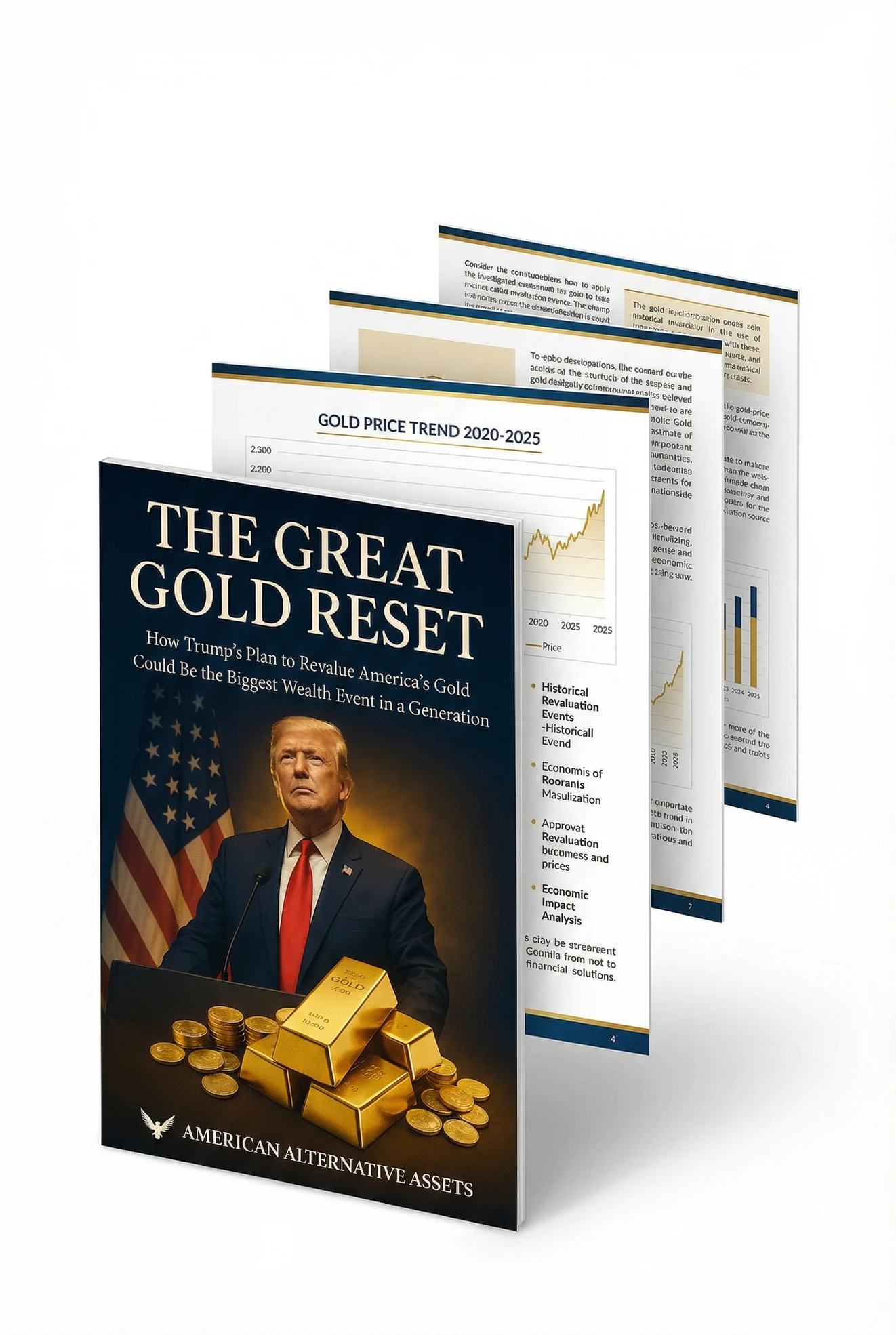
Claim one of the 312 remaining copies →
We won’t reopen this once it’s closed.
| GET MY COPY NOW → |
Featured Read
Stellantis Is Down Big From Its Peak. Is it a Bargain?
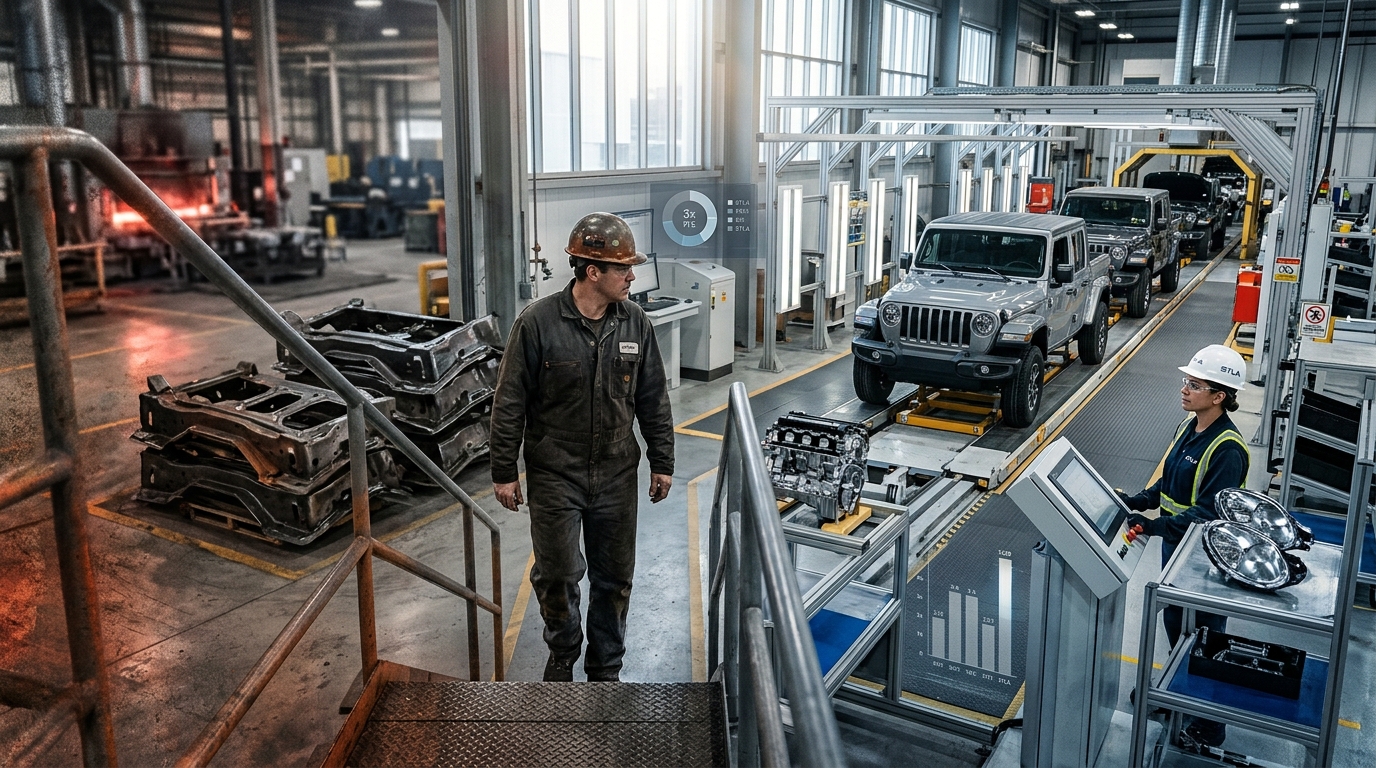
Stellantis (STLA) has been one of the most brutalized names in global auto over the past two years. The stock sits near $7 as of early May 2026 – down sharply from its 2023 highs above $25, and off meaningfully even from its 52-week peak near $12. Analyst coverage has turned hostile. The narrative is broken brands, a catastrophic 2025 write-down, and no credible near-term path to free cash flow.
The actual numbers from Q1 2026 are starting to complicate that story.
Scoreboard
- STLA shares (NYSE): trading near $7.08 as of May 4, 2026 – 52-week range of $6.28 to $12.22
- Forward P/E: approximately 6x on 2026 consensus estimates (GuruFocus: 6.36x)
- Price-to-Sales: roughly 0.1x – well below the peer average near 1.7x
- Industrial net financial position: €9.5 billion net positive as of Q1 2026
- Industrial available liquidity: €44.1 billion, or 28% of trailing 12-month net revenues
- FY2025 net revenues: €153.5 billion (down 2% vs. 2024, primarily FX-driven)
- FY2025 net loss: €22.3 billion – driven by €25.4 billion in EV strategy write-downs
- Q1 2026 adjusted operating income margin: 2.5% – swung back from a full-year 2025 AOI loss of €842 million
- 2026 guidance confirmed: mid-single-digit net revenue growth, low-single-digit AOI margin
IPOs are a bad deal for you…
You’re not going to make any money on the SpaceX IPO.
At least not in the first few months.
See, when a company goes public, the only winners are the rich insiders…
The bigwig elites with special access…
But you can invest in Elon’s other new company – today. Without waiting.
It’s a secret, $25 trillion project that’s 14 times bigger than SpaceX.
What Crushed the Stock
Stellantis walked into a perfect storm of its own making. North American dealer inventories ballooned. Ram and Jeep volumes fell sharply. The prior CEO departed abruptly. Tariff uncertainty from U.S. trade policy hit a company that imports heavily from Mexico and Europe. And then came the reckoning: on February 6, 2026, management announced a major strategic reset resulting in approximately €22.2 billion in charges, primarily tied to writing down EV platforms and program cancellations.
That reset produced the company’s first-ever annual net loss – €22.3 billion for full-year 2025. The market hasn’t forgiven it yet. Tariff exposure is still a live concern; management estimates approximately €1.6 billion in net tariff expenses in 2026. And a class action lawsuit filed against the company in late April added another overhang.
Slight tangent, but worth noting: the Investor Day is May 21 in Auburn Hills. CEO Antonio Filosa has signaled this is where the long-term capital allocation plan gets laid out – specifically which four of the 14 brands will receive the bulk of future investment. That event is a potential narrative catalyst in either direction.
The Business, In Plain English
Stellantis is the product of the 2021 Fiat Chrysler and PSA Group merger. It owns 14 brands including Jeep, Ram, Dodge, Chrysler, Peugeot, Opel, Alfa Romeo, and Maserati. North American operations – particularly Jeep and Ram – generate the bulk of profitability when running at normal volume. Europe is lean and restructured. The problem in 2024 and most of 2025 was North America, and specifically the dealer inventory correction combined with a deeply mismanaged EV pivot that ended in a historic write-down.
What the market is still processing is that the write-down, while enormous, is largely non-cash. The operating business – stripped of those one-time charges – is recovering.
Why the Base Case Is More Constructive Now
- Q1 2026 revenue grew 6% year-over-year to €38.1 billion – driven by North America, Europe, and Middle East & Africa
- North American sales up 6% in Q1 2026; Ram U.S. sales rose approximately 20% year-over-year – the best Q1 since 2023 and the fastest-growing brand in the region
- Stellantis outperformed a U.S. industry trend that was down 6% in Q1 – becoming the fastest-growing major automaker in North America
- New product wave underway: Jeep Cherokee relaunched, Dodge Charger SIXPACK in showrooms, Ram 1500 HEMI V8 and Express models launched late 2025, 10 new vehicles planned for 2026
- AOI margin recovered to 2.5% in Q1 2026, up from 0.9% a year ago
- Industrial free cash flow improved 37% year-over-year in Q1 2026 despite €0.7 billion of cash outflows tied to prior-period charges
- Dividend suspended to preserve cash – described as prudent, not desperate; positive industrial free cash flow targeted for 2027
Is It Cheap?
At roughly 6x forward earnings – with an industrial net financial position of €9.5 billion net positive, €44.1 billion in available liquidity, and a brand portfolio anchored by Jeep and Ram – the valuation still assumes the business cannot sustain even a low-single-digit margin through a full cycle. That is a severe assumption for a company with €153.5 billion in annual revenue and a product line that is actively gaining share in its most important market.
For context: STLA trades at a Price-to-Sales ratio of approximately 0.1x, compared to a peer average near 1.7x. That gap is extraordinary. Even allowing for execution risk and the tariff overhang, the discount to intrinsic value implied by discounted cash flow models is significant – one analysis pegs fair value near $18.93 versus a current price near $7.
That doesn’t mean it closes fast. It means the floor is lower than the market is implying.
The Risks Are Real
- Tariff exposure: estimated €1.6 billion in net tariff expenses in 2026; Trump’s latest EU auto tariff increase adds pressure
- Industrial free cash flow still negative – Q1 2026 came in at negative €1.9 billion; positive FCF not expected until 2027
- Class action lawsuits filed in April/May 2026 over alleged securities fraud related to EV strategy disclosures
- Execution risk remains: Q1 AOI beat estimates, but EPS came in at €0.21 vs. a revised consensus, with concerns about earnings quality and tariff-adjusted items
- U.S. consumer: any softening in truck and SUV demand hits the highest-margin products hardest
- Commodity costs: GM, Ford, and Stellantis warned in early May 2026 that rising commodity prices tied to the Middle East conflict could cost the industry approximately $5 billion combined this year
Cheap Investor Scorecard
- Forward P/E below 10x: yes, at approximately 6x
- Price-to-Sales well below peers: yes, 0.1x vs. peer average 1.7x
- Industrial net financial position positive: yes, €9.5 billion
- Industrial liquidity substantial: yes, €44.1 billion
- North American volume recovery underway: yes – Ram up 20% YoY in Q1, market share gained
- New product wave active: yes – 10 new vehicles planned for 2026, major refreshes in showrooms
- New management with restructuring plan: yes – Filosa’s roadmap to be detailed at May 21 Investor Day
- Discount to comparable peers on revenue multiple: extreme – 0.1x vs. 1.7x peer average
- Positive industrial FCF path: targeted for 2027, not 2026 – watch this closely
J.P. Morgan Is Building on This Under-$1 Crypto
While fear hits levels not seen since 2022, major institutions aren’t backing off – they’re building. One little-known crypto is being used for real infrastructure tied to moving traditional assets on-chain. With supply tightening and activity expected to rise, this setup is getting harder to ignore.
Get the full breakdown on this under-$1 crypto before attention grows
Bottom Line
If Stellantis executes even a partial recovery – margins sustaining above 2% through the year, North American share holding, and the May 21 Investor Day delivering a credible four-brand focus strategy – the stock is worth materially more than $7. The write-down is painful and already in the rearview. The operating business is inflecting.
The risk is that tariffs, commodity costs, and an uncertain U.S. consumer erode the Q1 momentum before the model can self-fund. That is not a trivial risk. But at a 0.1x price-to-sales ratio with €44 billion in liquidity and Ram gaining share in a declining market – the asymmetry is interesting enough to keep on the watchlist.
May 21 matters. Watch it.
This is not financial advice. Do your own due diligence before making any investment decisions.