(Corrects main location of real estate advisory firm Newmark to New York instead of Ohio, paragraph 4)
By Juveria Tabassum
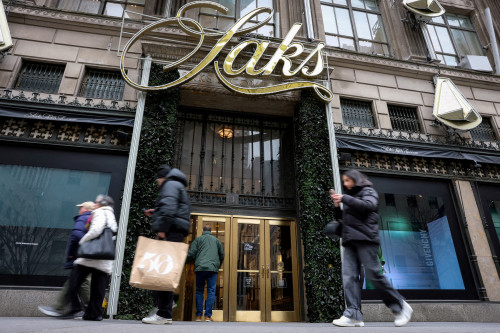
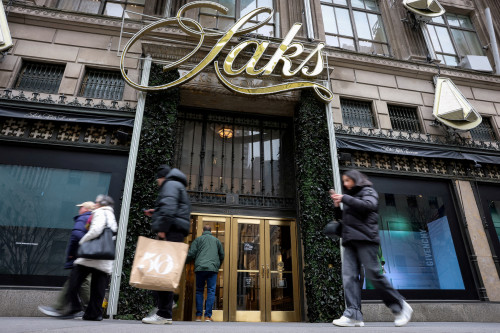
Jan 14 (Reuters) – Saks Global’s prime real estate portfolio could serve as a crucial bargaining chip with lenders as the hard-hit luxury shopping empire navigates its restructuring after filing for bankruptcy.
The upmarket U.S. department store conglomerate filed for Chapter 11 bankruptcy protection late on Tuesday, barely a year after a debt-laden takeover intended to create a luxury powerhouse by bringing Saks Fifth Avenue, Bergdorf Goodman and Neiman Marcus under the same roof.
While Saks Global secured a $1.75 billion financing package to help keep operations running through the bankruptcy process, questions remain on whether the owner of some of the best-known U.S. luxury chains can get back in the saddle.
Shutting down underperforming retail space could be a key strategy to ensure the business survives, said Brandon Isner, head of U.S. retail research at New York-based real estate advisory firm Newmark.
“One of the ways to monetize its portfolio would be through the sale-leaseback option, where Saks could sell its assets to an investor and lease them back to continue making money on the asset, providing it with liquidity and allowing it to keep things running at its stores,” said Matt Weko, division president of consumer goods and services at real estate investment adviser JLL Capital Markets.
Saks Global operates about 125 stores spanning about 13 million square feet (1.2 million square meters) in the U.S., and owns or controls ground leases at 39 of them, according to its court filing. Its retail empire consists of prime locations on high streets such as Fifth Avenue in Manhattan and luxury corridors in Beverly Hills, California, as well as top‑tier malls like Bal Harbour Shops in Florida, where Saks and Neiman Marcus banners anchor high‑end tenant mixes.
Saks’ flagship Fifth Avenue store is not included in the bankruptcy, according to the filing. Global leases the site from a separate entity, which has a $1.25 billion mortgage on it and is not among the debtors.
‘DARK STORES’ FIRST ON THE CHOPPING BLOCK
The court filings give a hint of the conglomerate’s immediate next steps.
Saks Global asked the court for permission to shut down about four stores that are no longer operating, commonly known as “dark stores.”
Selling such properties would command a discount of between 40% to 50% to their “lit value,” which takes in to account the fact that a store is open, according to a real estate adviser familiar with the discussion around Saks’ real estate, and who has evaluated the portfolio.
To keep shelves stocked, the distressed luxury retailer is expected to prioritize clearing payments to vendors to coax brands to supply fresh merchandise after a year in which more than 100 labels paused deliveries, bankruptcy experts note.
The financing package, still to be approved by the court, could buy time for Saks to retain the value of its real estate assets and monetize them, rather than force it to shut stores quickly at discounts, often known as a fire-sale closure, analysts and experts said.
THE TROUBLE OF TOO MANY
However, Saks and Neiman Marcus frequently co-anchor the same luxury centers, creating internal competition. At the Galleria Mall owned by Simon Property Group in Houston, for example, Neiman Marcus sits alongside Saks in a mall boasting more than 400 stores and several luxury brands, including Balenciaga, Louis Vuitton, Gucci and Bottega Veneta.
These co-locations would need to be reviewed and could be among the first to be sold as Saks conducts a review of its portfolio, analysts said. Saks, Neiman Marcus and Bergdorf Goodman also face increasing competition from luxury brands like Louis Vuitton or Chanel, which gravitate more and more toward their directly owned stores.
“Why would a shopper choose Saks over a brand’s flagship boutique, where they receive VIP perks and immersive brand experiences? Multi-brand retail only works when the environment adds value, and Saks hasn’t delivered that,” said George Gottl, chief creative officer at FutureBrand, which advises multi-brand retailers on store design.
Department store rival and Bloomingdale’s parent Macy’s is also closing about 150 underperforming stores, including at some key locations such as the one on Fulton Street in the New York City borough of Brooklyn, to help manage costs and invest in stores giving better returns.
“Owners of A‑quality centers would relish getting that space back. Repurposing two‑story anchors into split big boxes (such as the Primark and Dick’s House of Sport stores set to open at Newport Centre, New Jersey) or mixed‑use can refresh the tenant mix,” added Isner, the retail analyst at Newmark.
(Reporting by Juveria Tabassum in Bengaluru, Editing by Lisa Jucca and Matthew Lewis)