Hey there, bargain hunter. The freight recession lasted three years. Here is what the other side looks like.
J.B. Hunt Transport Services reported Q2 2026 results after the close on Wednesday, July 15, 2026. Revenue came in at $3.50 billion, up 19% year over year. Earnings per share of $1.91 rose from $1.31 a year ago (up 45%). Operating income jumped 32% to $259.5 million.
This is not a soft beat. These are real numbers.
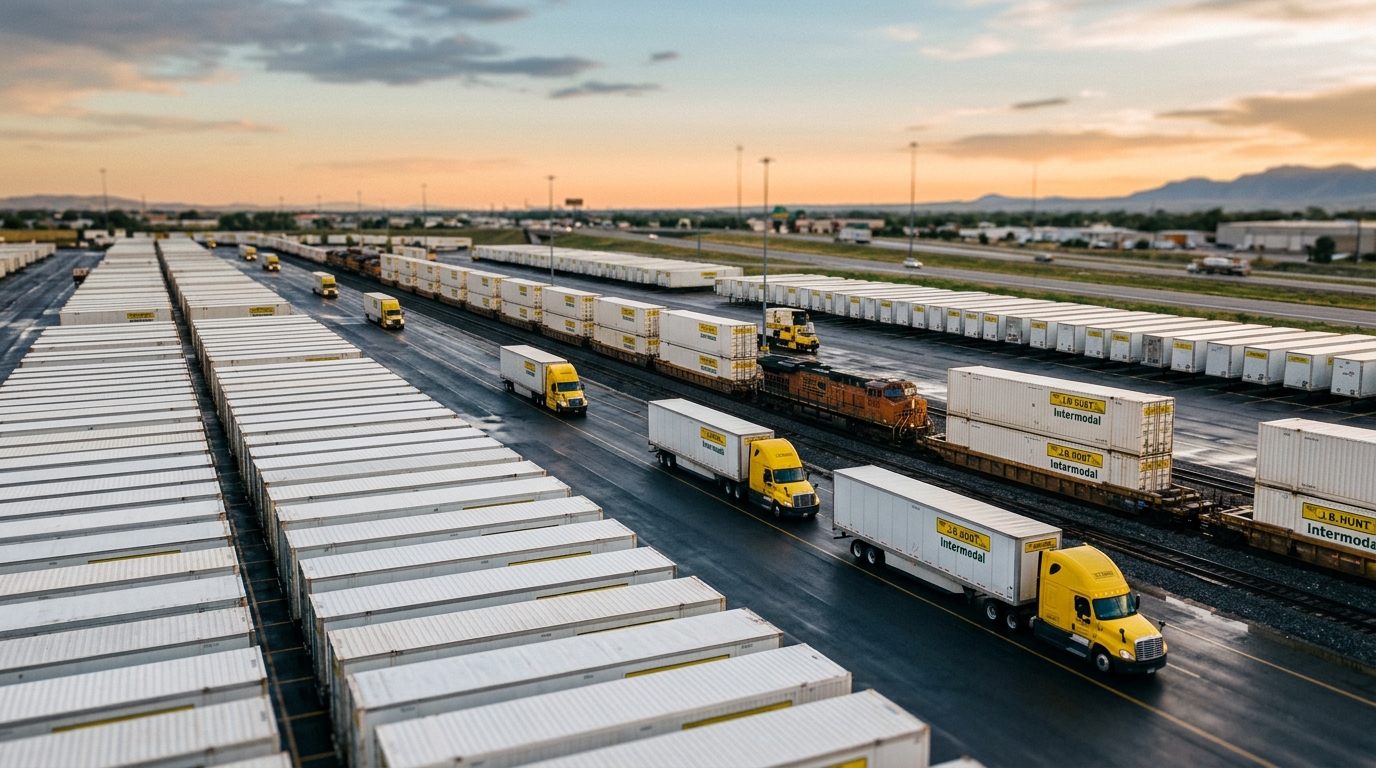
The intermodal segment did the heavy lifting. Intermodal revenue rose 22% to $1.75 billion. Load volumes were up 10%. Gross revenue per load was up 11% year over year, but revenue per load excluding fuel surcharge was up 1%. Eastern network loads grew 16%. Transcontinental loads grew 5%.
What is driving it? A combination of shrinking truck capacity and higher fuel costs is making rail-linked intermodal transport a better deal for shippers. Carriers exited the market over the past two years. Truckers went out of business. The oversupply that crushed freight pricing from 2022 through 2024 has been absorbed. Management said demand for intermodal “increased throughout the quarter,” and that the company has available container capacity to grow with customers heading into the second half.
Here is what makes this quarter interesting for a bargain hunter specifically.
The volume recovery is already happening. The pricing recovery hasn’t started yet.
Executives were explicit about this on the call. The 2026 bid season was set during a softer market environment earlier in the year. Contract pricing did not fully capture the tightening that has since occurred. The 2027 bid season, which typically begins in October, is where the company believes it can recapture meaningful rate improvement. Management said: the opportunity still in front of us is price.
Spot truckload rates moved first, as they always do. That pattern matches the 2017-2018 ELD cycle and the 2020-2022 demand shock. Each time, intermodal contract pricing lagged by several quarters before catching up. If the pattern holds, JBHT is somewhere in the middle of that lag right now. The volume is there. The pricing is the next shoe.
Full first-half 2026 picture: earnings rose 30.9% to $322.58 million, or $3.39 per share. Revenue rose 12% to $6.55 billion. That is not a cyclical bounce. That is a business that has been rebuilding its cost structure while waiting for the cycle to turn, and the cycle has turned.
- Q2 revenue: $3.50 billion, up 19% year over year
- Q2 EPS: $1.91, up 45% year over year
- Operating income: $259.5 million, up 32%
- Intermodal revenue: $1.75 billion, up 22%
- Intermodal load volume: up 10%
- Revenue per intermodal load (ex-fuel): up 1%
- H1 2026 earnings: $3.39 per share, up 31%
- H1 2026 revenue: $6.55 billion, up 12%
The read-through for the broader freight sector matters here. Old Dominion, XPO, and Werner all get watched more carefully when JBHT talks about tightening capacity and disciplined pricing. If intermodal contract rates start rising in the 2027 bid season the way management is telegraphing, this quarter may look like the beginning, not the peak.
The bear case is simple: global demand softens, shippers pull back, and pricing power evaporates before it fully arrives. That is the freight cycle’s oldest trick. Worth respecting.
But right now, the data says the cycle has turned. The pricing chapter hasn’t been written yet.