June 9, 2026
Just Days Left to Grab Early Exposure to SpaceX
Featured: Alibaba’s Pentagon label: the procurement risk
Editor’s Note: Marc Chaikin, the 60-year Wall Street legend who called Nvidia before it soared 45,000%, just came forward with another huge opportunity he’s spotted in the AI space. It’s a way to get backdoor pre-IPO exposure to SpaceX – and I haven’t heard anyone else talking about it. With the IPO date looming, this note from Marc is extremely time-sensitive, so take a moment now to read it.
Dear Reader,
One simple trade you can make in your brokerage account today can unlock a backdoor to pre-IPO exposure to SpaceX before it goes public.
Get in position now, and you could look forward to benefiting from as high as a $122 billion windfall on IPO day.
That’s a payout worth more than the market cap of most publicly traded companies.
WARNING: You only have days left to make this play before SpaceX goes public.
Get all the details of this trade right here…
Sincerely,
Marc Chaikin
Founder, Chaikin Analytics
P.S. I highly suggest you do NOT buy into the SpaceX IPO on day one, because share prices could become extremely unstable. This backdoor way in before the company goes public is a much better way to get your piece of the SpaceX pie. Click here to see how…
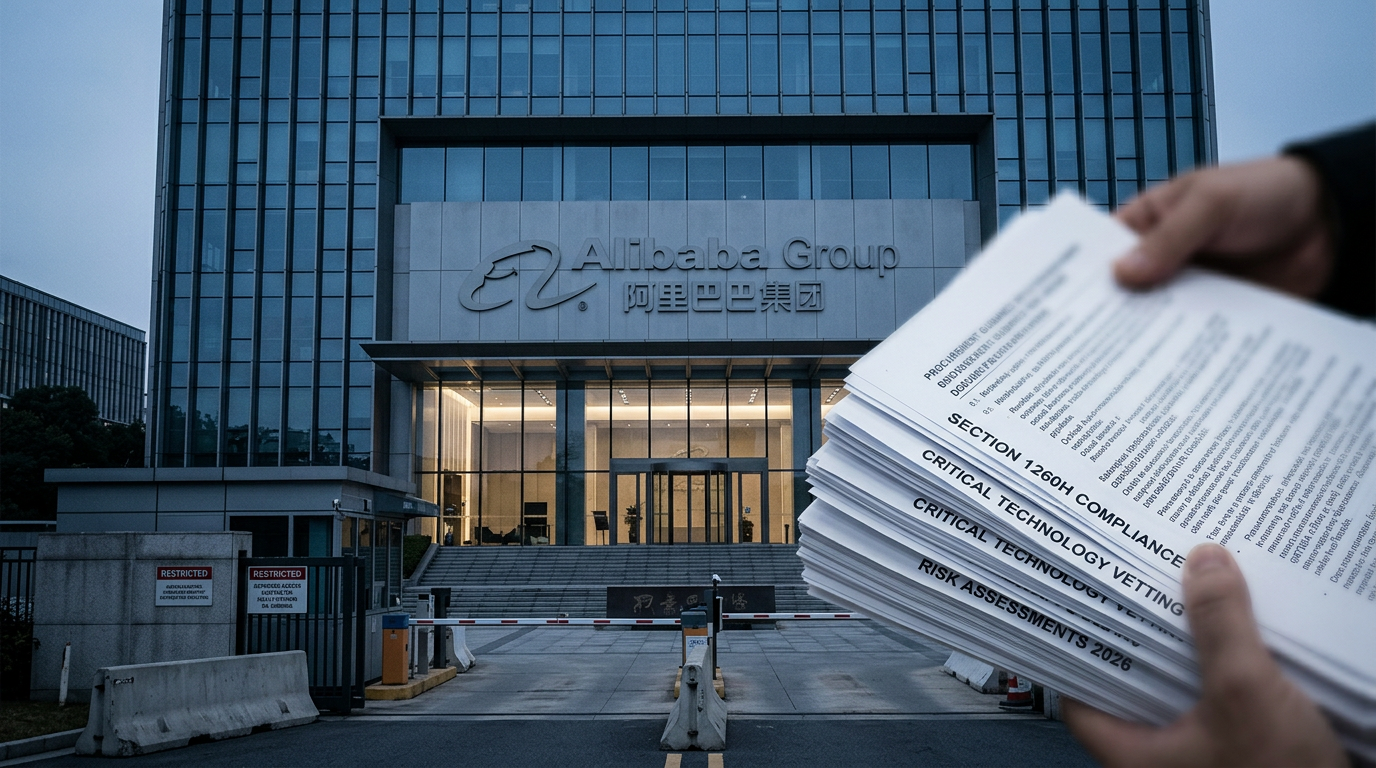
Alibaba’s Pentagon label: the procurement risk
One of the quieter forces shaping tech returns right now is not demand. It is procurement. Who government buyers can touch, who contractors can integrate, and which vendors become too annoying to explain on a compliance call.
Scoreboard
On June 8, 2026, the U.S. Defense Department updated its list of “Chinese military companies” under Section 1260H and added several large Chinese brands, including Alibaba. That list is a formal signal used across the defense procurement ecosystem, even when it is not a direct sanctions program. ([apnews.com](https://apnews.com/article/4d664a6f164538b451263eafcceddaa5?utm_source=openai))
Alibaba’s practical exposure to U.S. defense contracting is probably small. The important point is second order: suppliers, systems integrators, and enterprise IT shops tend to treat these labels as red flags because they create paperwork, review cycles, and “why is this here?” meetings.
We can’t keep this report public much longer.
We printed 1,000 copies of this report. 688 are gone.
When the last one goes out, we’re pulling it offline – the information inside is too sensitive to leave up indefinitely.
Here’s what’s inside the remaining copies:
This isn’t a newsletter. It’s not evergreen content.
It’s a window. And 688 people already jumped through it.
The real reason this matters
At first glance, this looks like politics as usual. But the expectations gap is real. Investors often assume the only meaningful constraint is an explicit ban. Procurement works differently. Once a vendor is tagged, risk teams start asking about:
- Indirect dependencies in cloud, content delivery, identity, and security tooling
- Whether a contractor can certify “clean” supply chains without ripping and replacing software
- Whether future rules expand from defense buyers to adjacent federal and state procurement
Slight tangent, but it matters: a lot of “consumer” internet plumbing is the same plumbing used by small businesses and public sector vendors. Dual use is the default now, not the exception.
Deep dive on Alibaba
Alibaba is not a single product company. It is a portfolio: China commerce, international commerce, logistics, local services, digital media, and a cloud business that sells compute and data services. The risk is not that one line item disappears overnight. The risk is that big customers and partners decide it is easier to avoid Alibaba adjacent infrastructure altogether.
What I’m watching next
Two things: whether the 1260H designation drives more contractors to adopt “no touch” procurement policies, and whether follow on actions show up in other rulebooks (export controls, entity listings, or tighter federal IT screening). For BABA holders, this is less about one government list and more about how fast compliance habits spread.