 11
11 Hey there, bargain hunter.
For years, the trade was simple. Load up on the seven biggest tech names in America, go home, and collect the outperformance. It worked beautifully — until 2026 decided the market needed a new script.
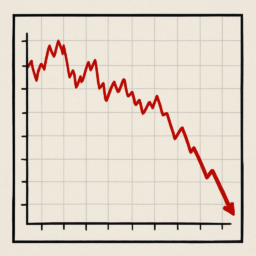
The Magnificent 7 are collectively down 10% from their highs. That’s not a garden-variety pullback. That’s the sound of a consensus trade breaking apart at the seams.
| |
| Mag 7’s relentless assault on Nvidia’s future Nvidia’s biggest customers are now buying and selling chips to each other. That means, the virtual monopoly that fueled NVDA’s $4 trillion market cap is OVER. If you currently own NVDA, here’s a better alternative. Their competition is scarce, which puts them in a hugely advantageous spot. This supplier’s stock has outperformed Nvidia’s by 50X since July. Click to get the full details on this urgent “Nvidia alternative” right here. |
The thesis was seductive and not entirely wrong: these seven companies were the infrastructure layer of the AI revolution. Whoever controls the compute, the cloud, and the ad stack wins the decade. So investors priced them accordingly — the Magnificent 7 index trading at nearly 29 times forward earnings earlier this year, a 26% premium to the broader S&P 500.
The assumption baked into every price: AI spending would translate into margin expansion, and soon. The market was not buying hype. It was buying a timeline.
The timeline got complicated.
Microsoft — still one of the most closely watched AI proxy trades in the market — just froze hiring across its Azure cloud and North American sales divisions. Executives instructed managers to halt the hiring of any new candidates who did not already have a job offer, citing the need to cut costs and boost margins. This is not a seasonal quirk. This is a company sitting on $37.5 billion in quarterly AI infrastructure capex, watching the gap between revenue growth and gross margin performance refuse to close.
The internal message from Azure leadership was unambiguous: until margins improve, no new hires. Meanwhile, OpenAI accounts for roughly 45% of Azure’s revenue backlog — meaning Microsoft’s growth engine is tethered to a single partnership that demands constant GPU spend. That is not the profile of a business ready to compound its way to 34x earnings.
MSFT shares are down roughly 24% year-to-date. The worst start to a year on record.
Nvidia reset on valuation concerns, though its fundamentals remain operationally impressive — data center revenue surged 75% year-over-year to $62 billion in its most recent quarter. The correction here is about multiple compression, not business deterioration. Meta carries its own legal overhang, and profit growth across the group is expected to slow to roughly 18% in 2026 — barely better than the other 493 companies in the S&P 500.
That’s where things get interesting.
The market isn’t abandoning Big Tech because it stopped believing in AI. It’s abandoning the idea that all seven names deserve the same premium for the same reason at the same time. Investors are no longer buying the group on blind faith — they’re running an ROI audit. And several of these companies are failing it.
The era of the easy trade — buy an index of the seven largest tech stocks and expect outperformance — is over. What replaces it is more interesting, and more selective.
| |
| Buy Now Before it Potentially Trades Med-X is moving toward a possible Nasdaq listing (ticker: MXRX) – and once that happens, the early window closes. Before Wall Street prices it in, Med-X has already generated $6.4M in sales, placed its Nature-Cide products on Amazon.com, Walmart.com, and Kroger.com, and begun expanding into 41+ global markets. Independent lab tests show Nature-Cide outperforming chemical pesticides – right as regulators and consumers force the $17B pest control industry to go natural. This is the gap before the bell. Review the Med-X opportunity now – before Nasdaq plans unfold. Disclosures: This is a paid advertisement for Med-X’s Regulation A+ Offering. Please read the offering circular at invest.medx-rx.com. |
Two sectors are absorbing the rotation: Hard Science biotech and Energy.
On the biotech side, the setup is structural, not speculative. Over $200 billion in annual pharmaceutical revenue is at risk from patent expirations through 2028. Major pharma companies are sitting on more than $1.5 trillion in acquisition firepower. Morgan Stanley has already flagged continued outperformance for US small-to-mid cap biotech, noting that commercial-stage companies are shifting from consuming capital to producing it.
Kodiak Sciences (KOD) just reported positive Phase 3 topline data for Zenkuda on March 26, with 62.5% of patients hitting the primary endpoint versus 3.3% for sham — with an 85% risk reduction in sight-threatening complications. The company says it has a BLA-ready profile and intends to accelerate its submission timeline.
Rocket Pharmaceuticals (RCKT) moved 11% in premarket after the FDA approved its gene therapy Kresladi — the company’s first commercial product. The stock is up 34% year-to-date. The commercial milestone matters less for near-term revenue (the target disease treats fewer than 10 patients per year) and more because it de-risks the entire gene therapy platform and manufacturing network for future approvals.
On the energy side, the catalyst is blunter. Brent crude hit $107.81 per barrel on March 27, roughly $34 above where it traded a year ago. The Strait of Hormuz is effectively closed following escalating military conflict. Global oil supply is projected to fall by 8 million barrels per day in March alone, according to IEA data. Energy is the only S&P 500 sector in positive territory this month, gaining more than 9% in March. ConocoPhillips jumped 3.2% on March 26 alone. Valero’s refining margins hit $18.65 per barrel, with the stock up 26% in March.
This isn’t a momentum trade. It’s a supply shock with no clear resolution on the horizon.
The Mag 7 correction is not a buying opportunity dressed up as a crisis. It’s a repricing event — the market asking a question these companies have avoided answering for two years: where are the returns on all that AI spend?
Until Microsoft shows margin improvement, until Nvidia’s premium is justified by enterprise adoption at scale, and until Meta navigates its legal exposure, the headwind is structural, not cyclical.
The money that’s leaving isn’t sitting in cash. It’s finding its way into companies with hard catalysts — FDA approvals, Phase 3 readouts, and oil fields that don’t care about your AI roadmap.
The trade that defined the last three years just handed you a map to the next one. The question is whether you’re reading it.
This editorial is for informational purposes only and does not constitute investment advice, a solicitation, or a recommendation to buy or sell any security. All investing involves risk, including the possible loss of principal. Past performance is not indicative of future results. Always conduct your own due diligence before making any investment decision.