
September 7, 2026
Descartes Gets Paid When the Tariff Map Changes.
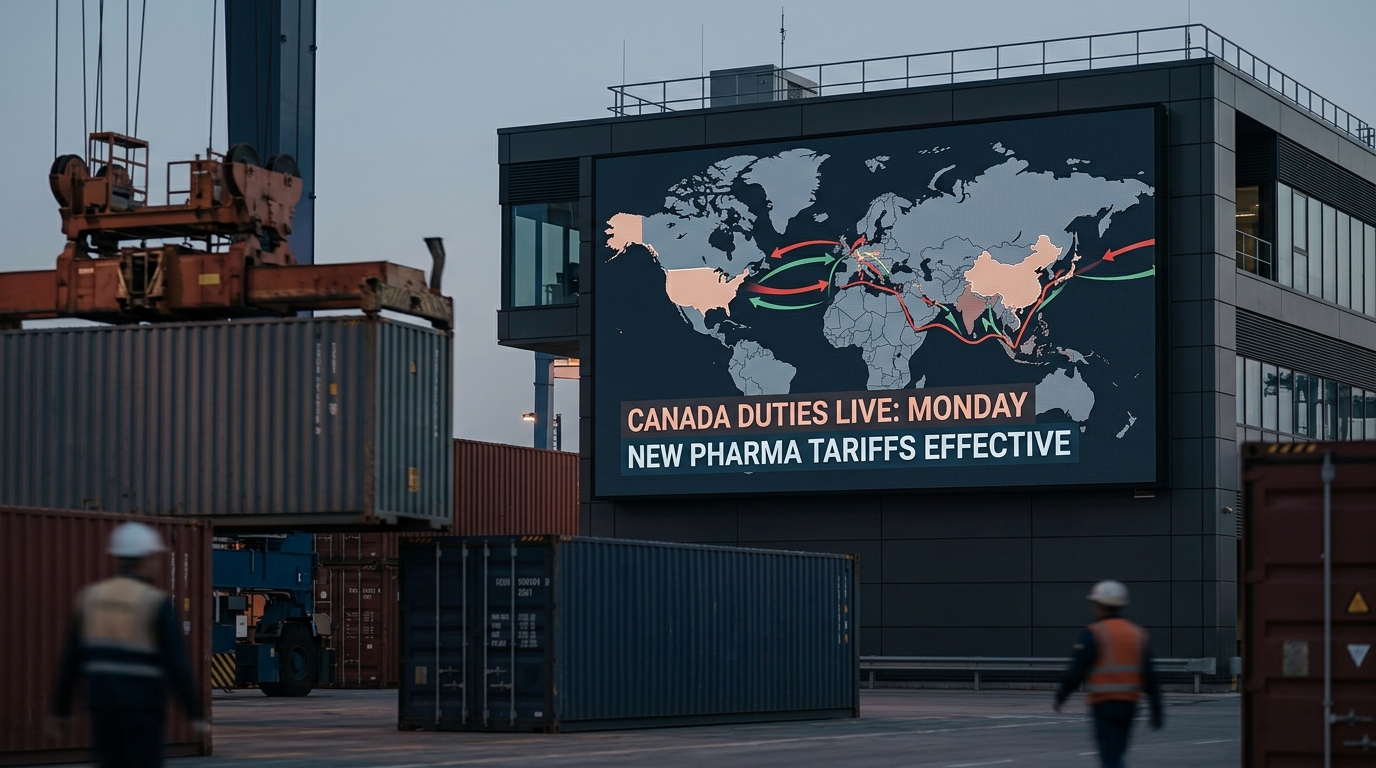
With Canada’s new duties live Monday, copper filing rules tightening, and pharma tariffs expanding late September,
Hey there, bargain hunter. Most customs-software companies have a slow quarter when trade policy gets complicated. Descartes Systems Group (DSGX) has the opposite problem. The more chaotic the rulebook, the more shippers need someone to decode it. And right now the rulebook is being rewritten in real time.
The Department of War Is on a Gold Mine’s Filings
On May 21, 2026, the board of a federal bank voted unanimously to lend nearly $3 billion to build a gold mine on American soil. Congress got 25 days notice. Nobody objected.
Final papers are expected in the second half of this year. The day that ink dries, three things happen at once:
One more detail. The company’s own filings cite “substantial support and partnership from the Department of War,” a phrase we’ve never seen on a gold project. The reason: alongside its gold, the deposit holds a metal China formally banned from export to the United States. The only domestic reserve in the country.
The company is about one fiftieth the size of Newmont.
Scoreboard
DSGX closed Friday at $78.94, down 28% from its 52-week high of $109 and sitting near its 52-week average. The market has treated Descartes as a freight-cycle name when it deserves to be treated as a compliance-software name. Those are very different animals. Q2 fiscal 2027 results are expected after the close Thursday, September 10.
What Actually Happened
Q1 fiscal 2027 was a record. Revenue hit $193.6 million, up 15% year over year. Services revenue reached $180.5 million, also up 15%, and represented 93% of total revenue. Income from operations came in at $62.5 million, up 35% from the same quarter a year ago. Operating cash flow rose 40% to $75.1 million. Adjusted EBITDA was $89.8 million at a 46% margin. The company finished the quarter with $377 million in cash and zero debt.
CEO Edward Ryan said Descartes was ahead of plan, with records across revenue, profit, operating cash flow, and margins. Organic services revenue growth was roughly 9%, with the rest coming from acquisitions, including the acquisition of fleet-safety software firm Idelic with an all-cash, performance-based earn-out of up to $12 million.
The Real Reason This Matters Now
Descartes reports into a fortnight that is almost comically good for its business model. Canada’s retaliatory tariffs on 700-plus U.S. products are scheduled to take effect at 12:01 a.m. Monday, September 8, at rates of 15%, 25%, and 50%, covering $27.6 billion in U.S. imports. Every company caught on either side of that border now needs to reclassify shipments, verify origin, and update duty calculations. That work runs through Descartes’ Global Trade Intelligence platform.
“Elon’s #1 AI Stock” SET TO SOAR
Forget ChatGPT!
Because Elon Musk’s AI promises to be 100x more powerful.
After all, ChatGPT just works online…
While Elon’s AI works in the real world.
Then, on September 14, CBP begins issuing fatal F794 rejection errors on any entry summary for covered copper products that is missing primary smelt and cast country data. Importers who have not yet updated their ACE filings will have entry summaries rejected. Descartes sells precisely the tools that get those filings right.
And on September 29, the 100% Section 232 pharma tariff extends to other companies beyond the group listed in Annex III that went live July 31. Every pharmaceutical customs broker in the country is scrambling to reclassify HTS Chapter 29 and 30 lines under the new Chapter 99 provisions. Descartes’ e-commerce customs entry and compliance tools sit in that workflow.
The Business: How It Makes Money
Descartes runs a logistics network connecting shippers, carriers, brokers, and customs authorities across more than 160 countries. It charges subscription fees for modules covering routing, customs compliance, global trade intelligence, sanctioned-party screening, and freight visibility. Because 93% of revenue is services, revenue is sticky and predictable. Complexity is the product’s native environment.
Is It Cheap?
At $78.94 and a P/E of roughly 39x trailing earnings, Descartes is cheaper than it has looked in years. The consensus analyst price target sits around $100, implying roughly 25% upside from current levels. RBC Capital holds an Outperform with a $126 target heading into Thursday’s report.
A Forgotten Energy Source Is Powering Back Up
While investors chase the next tech story, one long-ignored sector is quietly heating up. A mix of global policy, rising demand, and tightening supply could reignite this market before 2026. See what the latest research reveals.
For Q2, management estimated baseline revenue of approximately $169 million and baseline adjusted EBITDA of about $66.5 million, around 39% of baseline revenue. The company has run above that 40% to 45% adjusted EBITDA margin target for several consecutive quarters, so the baseline should be the floor rather than the ceiling.
Bull / Base / Bear
- Bull: Tariff complexity accelerates demand for trade intelligence subscriptions; Q2 beats on organic growth; guidance lifts; stock re-rates toward historical valuation multiples.
- Base: Services revenue grows 12% to 15%, EBITDA margin holds above 44%, guidance is maintained; stock grinds toward analyst targets over two to three quarters.
- Bear: A genuine freight-volume recession reduces transaction counts inside the GLN; management signals macro caution; the stock revisits its 52-week low near $62.55.
Action Plan
DSGX at 28% below its 52-week high, carrying zero debt, generating $75 million in quarterly operating cash, and reporting into the most compliance-intensive trade calendar in recent memory is worth attention. Consider a starter position before Thursday’s close, then size up on any weakness in the after-hours session if guidance holds or improves. A freight-driven selloff that takes shares back toward $70 is a better entry, not a reason to walk away.
Cheap Investor Scorecard
- Services revenue growth rate: target above 12% year over year in Q2
- Adjusted EBITDA margin: watch for sustained performance above 44%
- Operating cash flow: Q1 set the bar at $75.1 million; Q2 should hold near that level
- Organic growth disclosure: management strips out FX and acquisitions; organic above 8% is healthy
- Global Trade Intelligence mentions: listen for volume commentary on duty-content and tariff-screening tools
- Q3 guidance tone: post-September 8 and September 14 deadlines should generate visible pipeline commentary
- Cash balance: $377 million at end of Q1; acquisition optionality is a feature, not a bug
- Valuation relative to history: current P/E roughly 39x; watch for re-rating catalyst
Bottom Line
If Thursday’s Q2 report shows services revenue growing at or above 12% and management acknowledges accelerating demand from the September tariff wave, DSGX at $79 is a meaningful discount to intrinsic value. If volume softness from a slowing freight market shows up in the numbers, the bear case finds legs. Watch the organic growth figure, not the headline. That is the number that tells you whether tariff complexity is actually showing up in the subscription base, or whether the favorable macro story is still running ahead of the realized revenue.