June 19, 2026
NVDA, AMD and Broadcom: The AI Arms Race
The numbers driving the most searched theme in the market right now.
Every week somebody asks whether the AI trade is over. Every week the data says otherwise. Nvidia just reported Q1 fiscal 2027 revenue of $81.6 billion, up 85% year-over-year, with data center revenue hitting $75.2 billion, up 92%. Jensen Huang called it the buildout of AI factories — “the largest infrastructure expansion in human history.” Hard to argue with that framing when the numbers back it up. And then Nvidia guided Q2 revenue to $91 billion, well above the $86.8 billion Wall Street was expecting. That part got less attention than it deserved.
Here’s where it gets interesting. NVDA’s forward P/E currently sits around 23.5x — well below the semiconductor sector median of 36.2x. The stock has lagged its own sector in 2026 even as the AI infrastructure buildout accelerates around it. Either the sector is running too hot, or Nvidia is genuinely cheap relative to the business it has built. That’s the question traders are sitting with right now. The consensus analyst target is roughly $299 across 62 covering analysts. The stock trades around $207. The gap between the two numbers is the argument.
SpaceX ‘Dark Energy’ Replaces Foreign Oil
For years, we’ve been told SpaceX is a rocket company. But according to new satellite images from 300 miles above the Earth’s surface, there is something very strange going on at SpaceX right now that has nothing to do with space. It could soon replace our need for foreign oil forever and ignite a $10 trillion boom for the stocks involved.
Broadcom is the name that’s been getting the most institutional attention beyond Nvidia. Q2 fiscal 2026 AI semiconductor revenue came in at $10.8 billion, up 143% year-over-year — above even Broadcom’s own forecast. Q3 guidance calls for $16 billion in AI chip revenue, which would represent more than 200% growth from the same period a year earlier. CEO Hock Tan has publicly said the company has “line of sight” to AI chip revenue in excess of $100 billion in fiscal 2027, backed by a disclosed $73 billion backlog. Full-year fiscal 2026 AI revenue is projected to approach $56 billion, nearly tripling from the prior year. That’s not a company riding the AI wave. That’s a company becoming the wave itself.
AMD holds a smaller slice of the data center GPU market versus Nvidia’s dominant position, but its open ecosystem approach via the ROCm software platform gives hyperscalers a credible alternative. That optionality has real value as the infrastructure buildout scales. Nvidia’s CUDA moat is real, but it’s not permanent, and AMD knows it.
Slight tangent, but it matters: CoreWeave went from $229 million in revenue in 2023 to $5.1 billion in 2025, and is now guiding for $12 to $13 billion in 2026. Microsoft accounted for 67% of that 2025 revenue. Concentration risk is real and well documented. But so is the demand signal — the company’s revenue backlog has now reached nearly $100 billion, with OpenAI, Meta, Anthropic, and Jane Street among the customers signing large multi-year commitments. Management expects Microsoft’s share to fall below 50% as those newer contracts ramp. Worth watching.
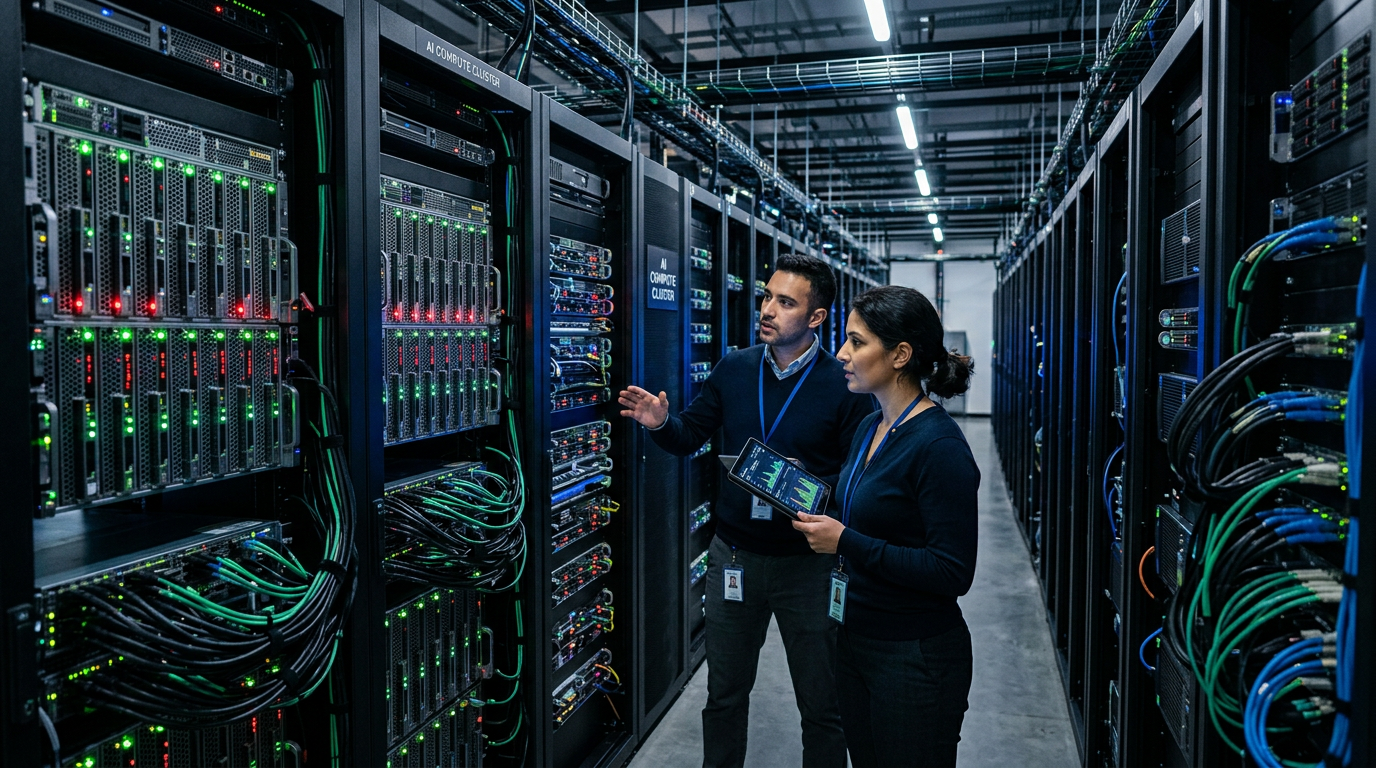
Goldman Sachs estimates AI infrastructure beneficiaries will account for roughly half of S&P 500 earnings-per-share growth this year. Consensus hyperscaler capex estimates have reached $754 billion for 2026, an 83% jump from 2025, with $905 billion projected for 2027. Goldman has also raised its S&P 500 year-end target to 8,000, citing earnings growth as the primary driver. The spending cycle does not look like it is slowing. Goldman’s own analysts have noted that consensus capex estimates have been too low for three consecutive years running.
Sector Breakdown
Within the AI theme, capital is still bifurcating. Nvidia, Microsoft, Broadcom, and TSMC are considered the strongest core compounders by most research shops. TSMC entered high-volume 2nm chip manufacturing in January 2026 and has since been ramping capacity aggressively — 2nm orders are reportedly booked through 2026 and into 2027, with the company running at double its normal expansion pace to keep up. Its Arizona fab is expected to boost output by 80% this year.
The New Arms Race Is Being Built Right Now
Global tensions are accelerating a new kind of arms race powered by advanced technology.
AI, drones, and autonomous systems are becoming central to modern defense strategies. This report reveals five companies positioned to benefit from this shift and what it could mean for investors.
Microsoft, despite a roughly 15-17% share price decline year-to-date on heavy capex concerns, has AI embedded across Azure (which grew 40% in its most recent quarter), Microsoft 365 Copilot, Edge, and GitHub. Azure AI revenue is now running at an annualized rate of $37 billion. Morningstar rates the stock as significantly undervalued relative to their $600 fair value estimate, pointing to a wide economic moat driven primarily by switching costs.
Price Action and Technicals
NVDA has been trading in the $204-$211 range in mid-June. The $200 level has acted as psychological support across multiple tests. Volume has been elevated on down days, which typically signals institutional distribution rather than retail panic. Watch the 50-day moving average closely — a failure to reclaim it on the next bounce attempt would be a meaningful warning sign. On the upside, the analyst consensus target sits at roughly $299 across 62 covering analysts, with the most bullish published targets reaching beyond $360.
Scenario Modeling
- Bull Case: Blackwell architecture demand continues accelerating into Q2 FY2027, hyperscaler capex commitments hold at $754 billion or higher, and Nvidia reclaims its 50-day moving average with conviction. Price target range: $270-$305.
- Base Case: Revenue growth moderates to 60-70% year-over-year as Blackwell shipments normalize, valuation stays compressed near 23x forward earnings, stock grinds toward $240-$260 over the next two quarters.
- Bear Case: Export control escalation cuts off additional revenue streams, AMD gains meaningful share with ROCm adoption, and NVDA re-rates to 15x forward earnings on growth deceleration. Downside scenario: $160-$175.
A bet that doesn’t fit the pattern
A wealth manager overseeing $31.7 billion owns hundreds of stocks, mostly the names you’d expect.
Then there’s one exception: a small industrial company they’ve poured roughly $705 million into. The position is so large they must disclose every move. Their latest filing wasn’t a sale.
They bought more.
How to Think About Positioning
The AI infrastructure theme remains the most heavily searched and institutionally owned trade in the market. That alone is a risk factor. Crowded trades unwind faster than anyone expects. Position sizing discipline matters here more than most sectors. Traders watching NVDA should define their risk around the $195-$200 zone. A clean break below that level with volume expansion is not a level to average into blindly. AMD at current levels offers a lower-beta path to the same macro theme with less headline concentration risk. Worth a look as a paired position.
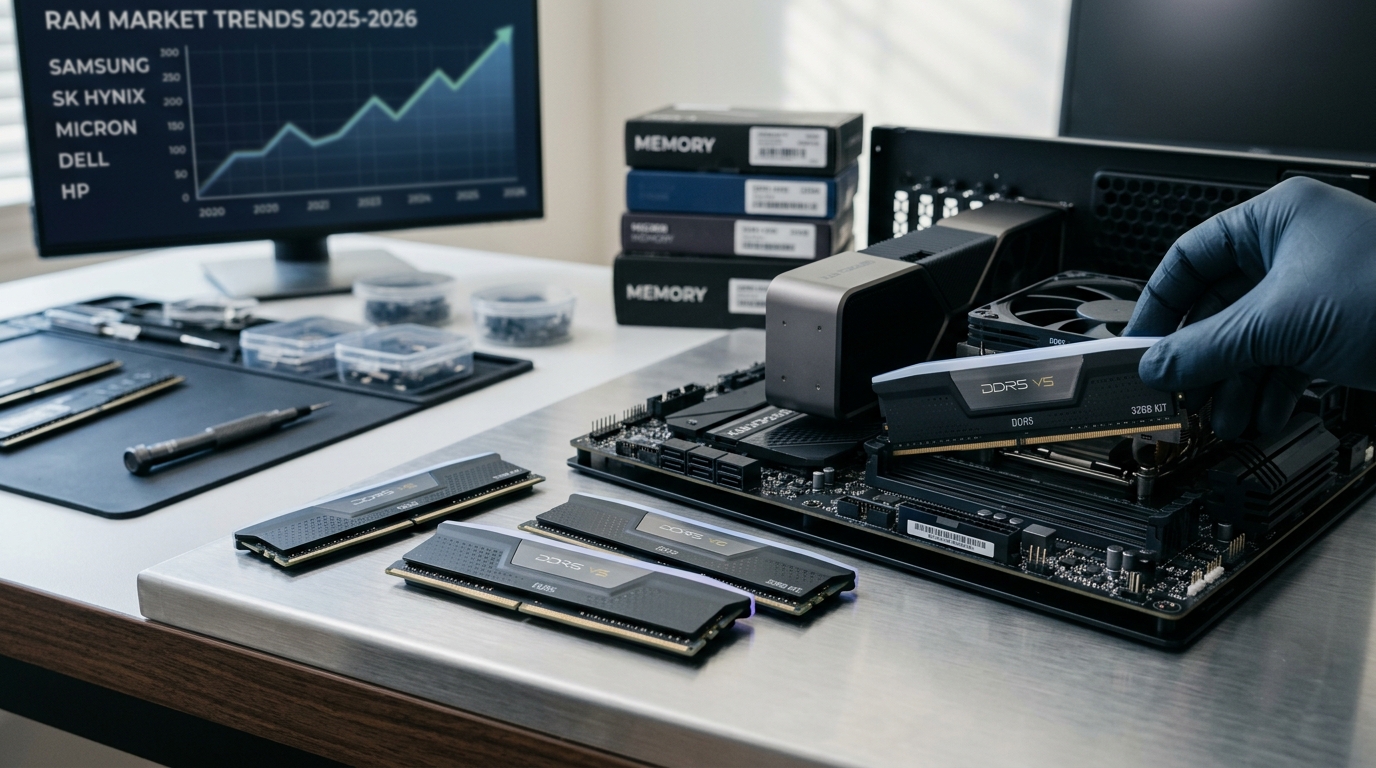
Regardless of near-term price action, the structural capex cycle now appears locked in through at least 2027. The companies supplying the picks and shovels — TSMC, Broadcom, and the memory infrastructure players like Micron — may offer better risk-adjusted exposure than the headline names trading on elevated expectations. That’s not a call to avoid Nvidia. It’s a call to think about the whole stack.
The Cheap Investor